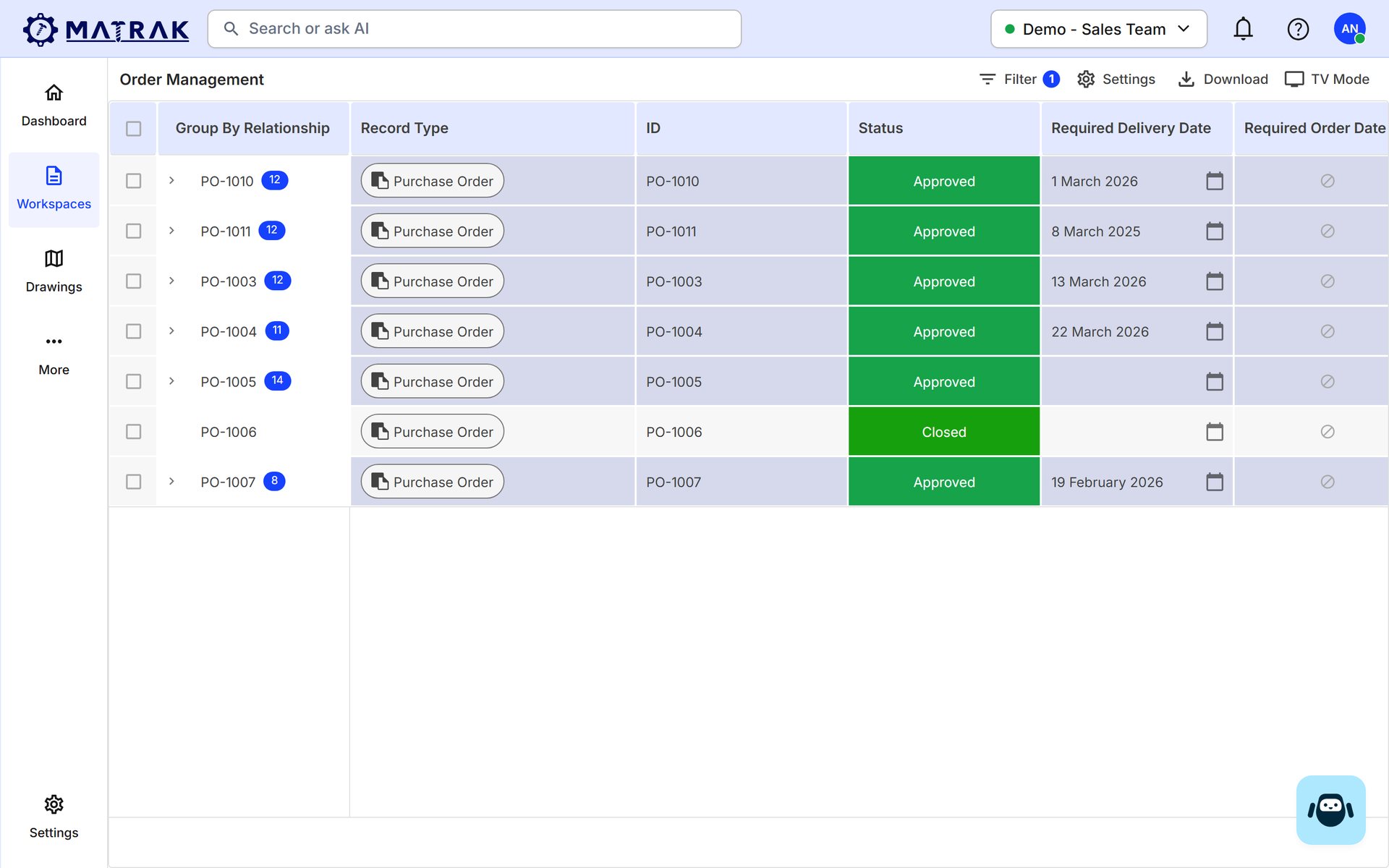
Procurement in construction is how a project buys what it needs to get built: the general contractor, the design, the subcontractors and the materials. The word covers two jobs. One is the procurement method, which is how the client engages the general contractor. The other is the buying of trades and materials once the job is running.
What is procurement in construction?
- For the client it is a choice made once: who designs, who builds, and who carries the risk if the design or the price is wrong.
- For the general contractor it is daily work: splitting the job into packages, tendering them, ordering long-lead materials and getting them to site on time.
Both end the same way: the right thing, on site, on the day it is needed, at the agreed price.
Procurement methods in construction
| Method | How it works | Design risk sits with | Suits |
|---|---|---|---|
| Traditional (construct only) | The client's consultants finish the design, then general contractors tender a lump sum | Client | Simple or fully designed jobs |
| Design and construct | One general contractor designs and builds to the client's brief. Called design-build in the United States | General contractor | Most commercial building |
| Construction management | The client hires the trades directly. A construction manager coordinates them for a fee | Client | Experienced clients, early starts |
| Managing contractor | A general contractor is engaged early for a fee and lets the trade packages | Shared | Jobs where the scope is still moving |
| Early contractor involvement | The general contractor helps finish the design in stage one, then prices the work in stage two | Shared, then general contractor | Complex jobs with buildability risk |
| Alliance | Client and contractors share the gain and the pain against a target cost | Shared | Large, uncertain infrastructure |
The construction procurement process
Whatever the method, the general contractor's buying follows seven steps.
- Package the job. Split the drawings and the bill of quantities into trade packages.
- Schedule it. Work back from the day each item is needed on site. That is the procurement schedule.
- Tender. Same drawings, same scope, same date for every bidder, so the prices compare.
- Award and order. A subcontract for a trade, a purchase order for materials.
- Approve. Shop drawings and samples, before anything is made.
- Track. Made, shipped, delivered. Chase what is late while there is still time.
- Receive and pay. Check what arrived against what was ordered, then pay for that.
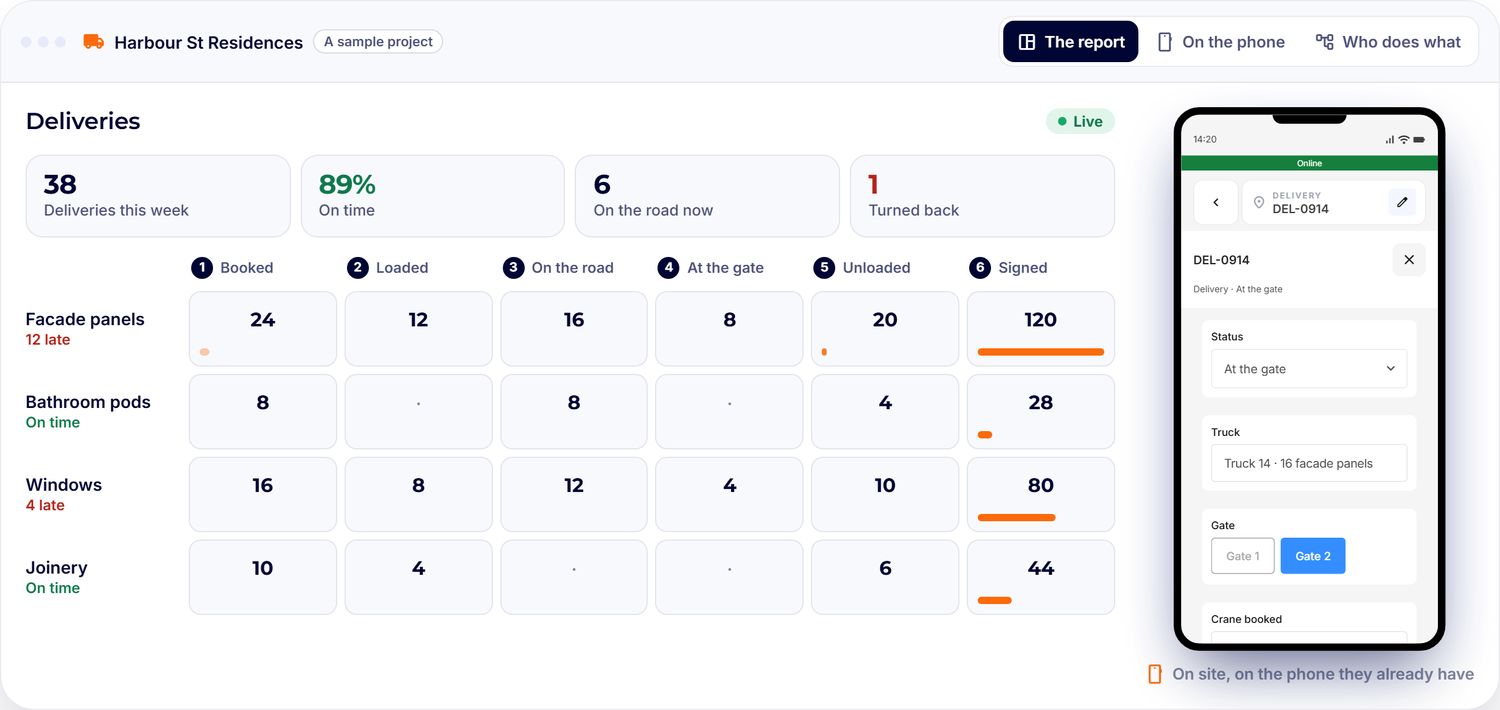
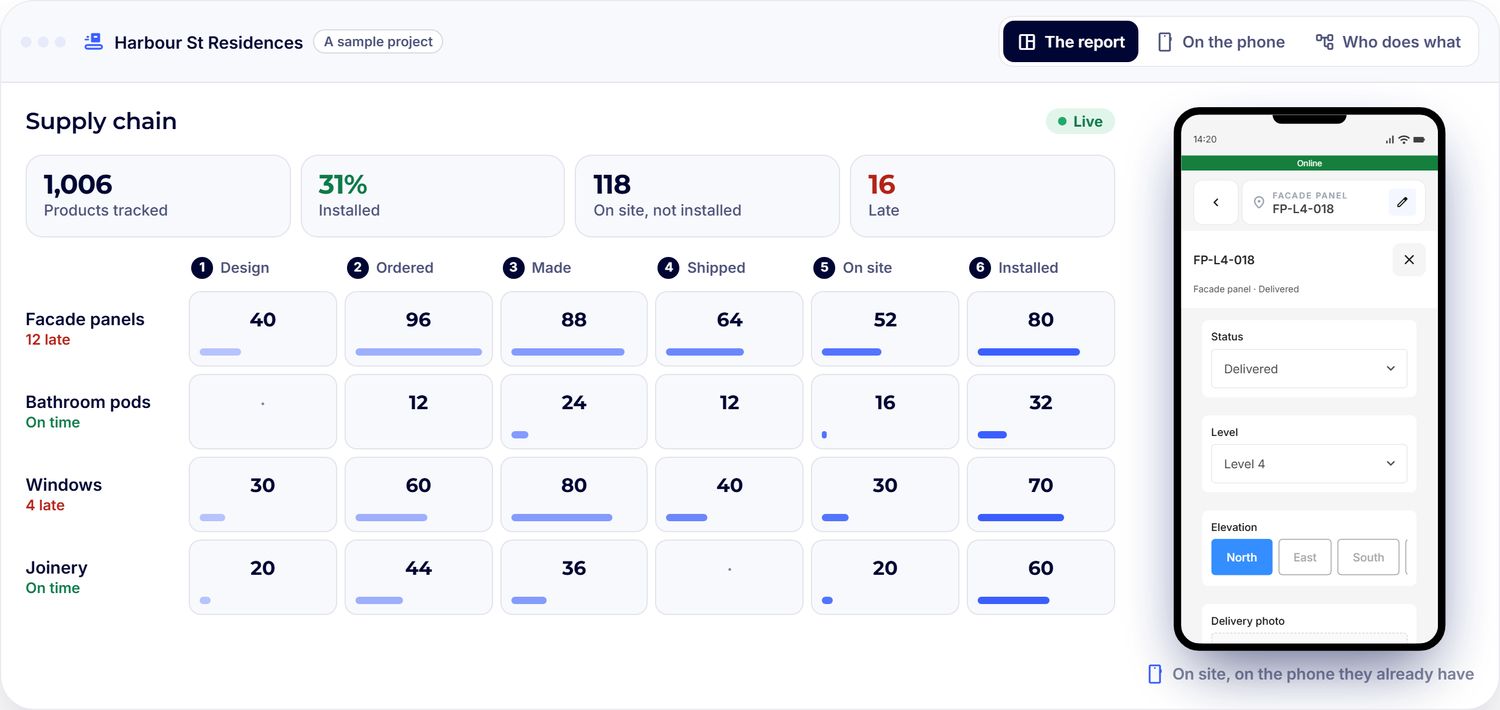
See what is late before it holds up the site. Matrak Supply chain tracks every product from shop drawing to installed.
Example: procuring a facade package
Weeks are counted back from the day the first panel is needed on site. The numbers are an example: yours come from your suppliers.
| Step | What happens | Weeks before site |
|---|---|---|
| Package | Scope and quantities taken from the facade drawings | 30 |
| Tender | Issued to three facade contractors | 28 |
| Award | Subcontract signed | 24 |
| Approve | Shop drawings submitted, marked up and approved | 20 |
| Make | Fabrication starts in the factory | 16 |
| Ship | First panels leave the factory | 6 |
| Receive | Arrived in the yard and checked | 2 |
| Call up | Delivered to site level by level | 0 |
Miss the award by a month and every line below it moves a month. That is why procurement sits on the schedule's critical path.
Construction procurement management: what to track
- Order-by dates. Which packages must be let this month to hold the schedule.
- Approvals. Shop drawings and samples that are out for review, and for how long.
- Status of every item. Ordered, made, shipped, on site, installed.
- What is late. And which activity on site it will stop.
- Changes. A revised drawing after the order is placed is a variation to the order.
- Payments. Paid against what has been delivered or installed, not what was promised.
Common procurement mistakes
- Buying from an old drawing. The order must name the revision it was priced on.
- Comparing tenders that are not alike. One bidder left out the scaffold. Level the scope before you look at the price.
- Forgetting approval time. Four weeks of shop drawing review is part of the lead time.
- Tracking the order, not the items. 'Order placed' says nothing about panel 37.
- Six spreadsheets. The supplier's, the freight company's and yours never agree.
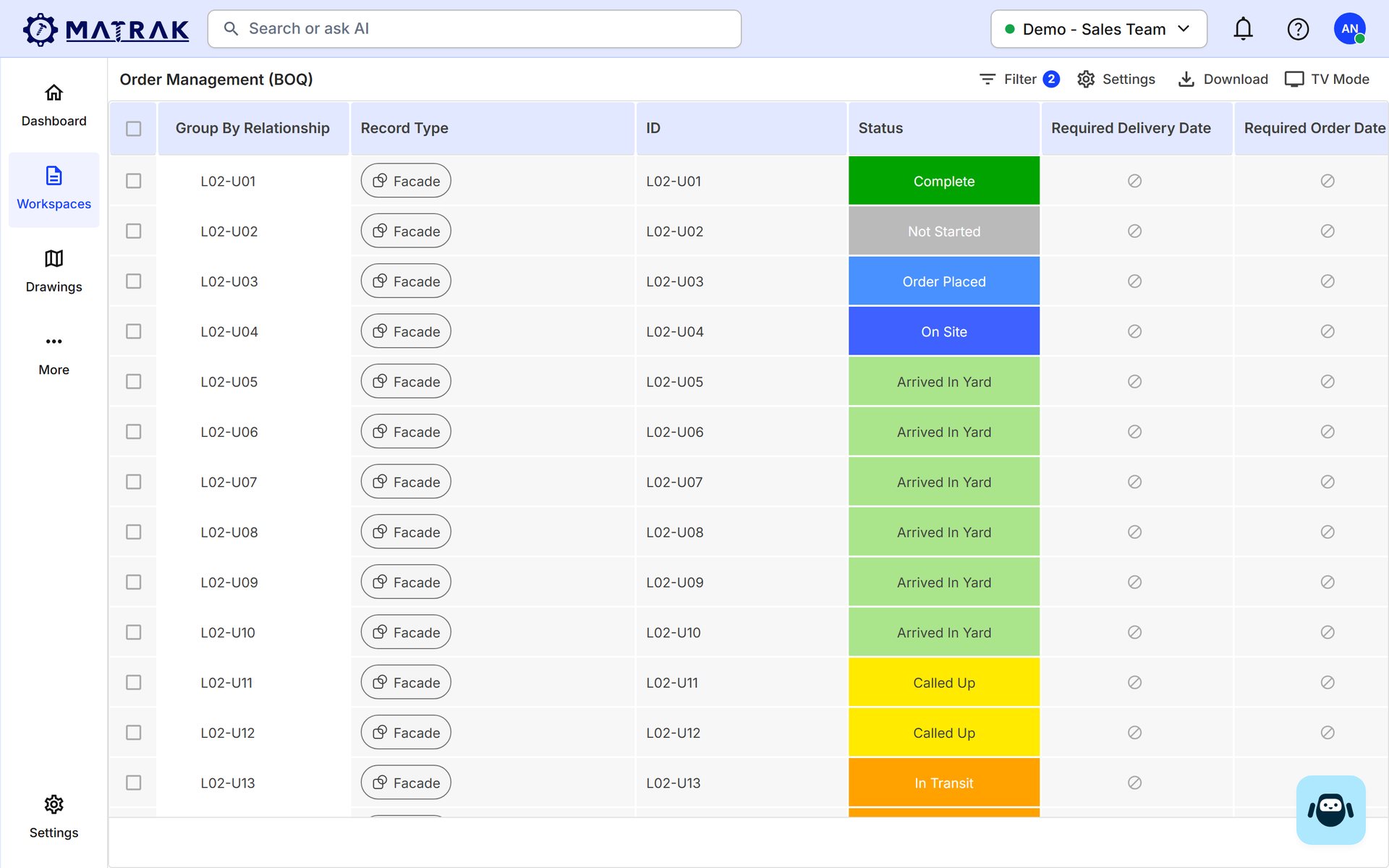
Procurement tracked from shop drawing to installed
| Matrak Supply chain | Spreadsheets and email | |
|---|---|---|
| A list of what to buy, with dates | Yes | Yes |
| That list made from the takeoff's bill of quantities | Yes | No |
| One QR code for each product | Yes | No |
| Factory, freight company and installer update the same record | Yes | No |
| Every product's status, from shop drawing to installed | Yes | No |
| What is late shown before it holds up the site | Yes | No |
How Matrak does it. Matrak Supply chain gives each product one QR code. The factory, the freight company and the installer each scan it, so everyone sees the same status from shop drawing to installed. $30,000 for one project for a year, with 5 supplier companies and 25,000 items included (A$, plus GST).
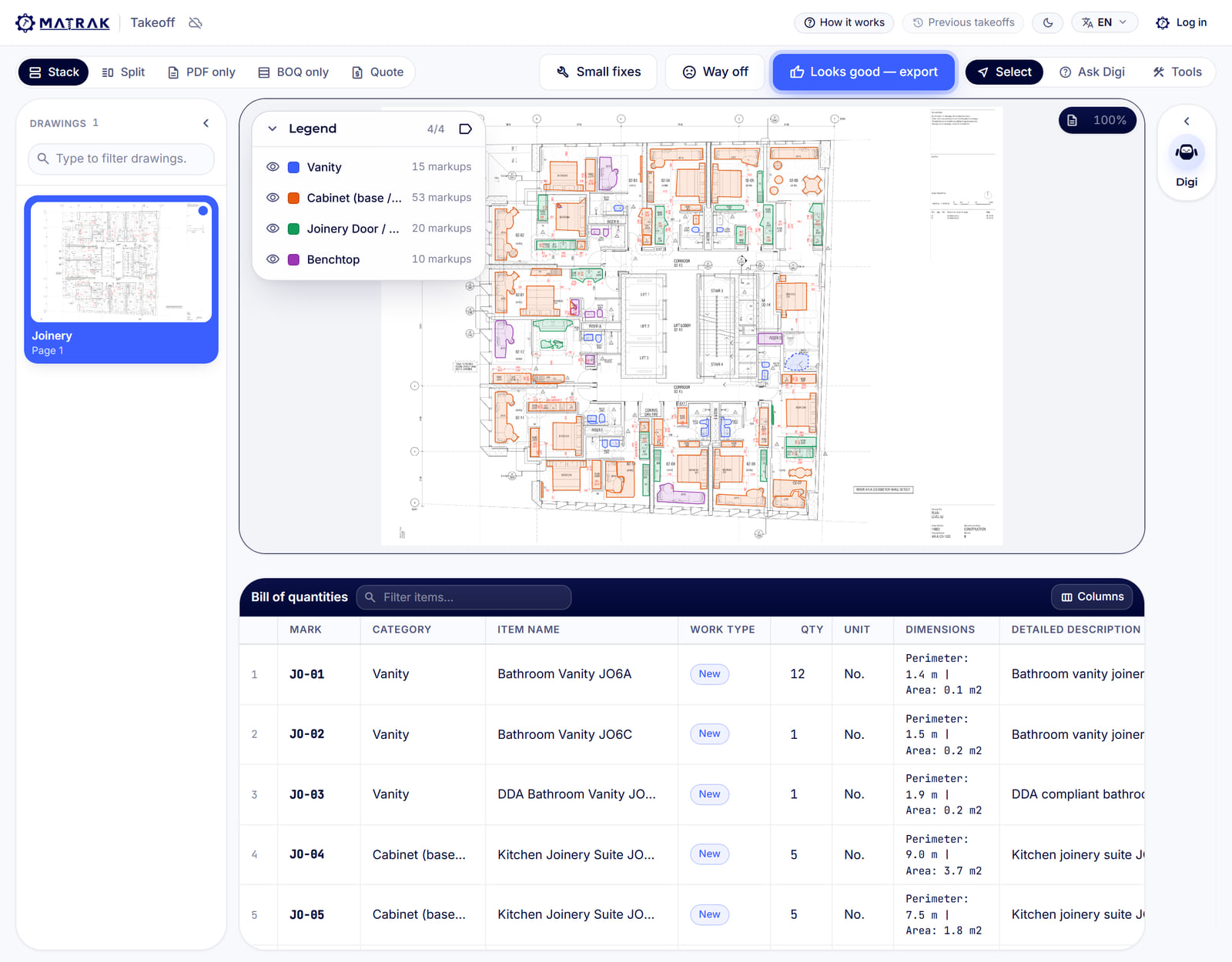
Nobody types a register. AI Takeoff reads drawings fetched from Procore, Aconex and Autodesk, each item is counted once, and its bill of quantities becomes the list of products to buy and track.
Comparing procurement tools? See how Matrak compares, including Matrak vs ProcurePro, and read the best construction procurement software. More on the product: procurement management software.
Frequently asked questions
What is procurement in construction?
Procurement in construction is the process of buying everything a project needs: the general contractor, the design, the subcontractors and the materials. It includes choosing how the client engages the general contractor, and the general contractor's tendering, ordering and tracking of trades and materials.
What are the main procurement methods in construction?
Traditional (the client designs, then a general contractor constructs), design and construct, construction management, managing contractor, early contractor involvement and alliancing. They differ in who designs, who holds the trade contracts and who carries the risk.
Which procurement method is most common?
Design and construct is widely used for commercial building in Australia and the UK, because one party is responsible for both design and construction. Traditional procurement remains common for smaller and simpler jobs.
What is the difference between procurement and purchasing?
Purchasing is placing the order and paying for it. Procurement is the whole process around it: deciding what to buy and when, tendering, choosing the supplier, approving shop drawings, tracking delivery and checking what arrives.
Who is responsible for procurement on a construction project?
The client and its advisers choose the procurement method. On the general contractor's side, the contracts administrator or procurement manager lets the packages, and the project manager owns the dates.