A digital product passport (DPP) is a digital record that travels with a product: what it is, who made it, what it is made of, how it performs, and how to maintain, reuse or recycle it. You open it by scanning a code on the product, usually a QR code. In construction it means every panel, window, door or batch of steel can show its own record, on site and for the life of the building.
The European Union is bringing passports in under its Ecodesign for Sustainable Products Regulation, and its revised Construction Products Regulation sets one up for construction products, phased in by product family. Australia, New Zealand, Canada and the UK have no passport law for building products, but clients, green building ratings and exports to Europe are asking the supply chain for the same information.
What is in a digital product passport?
| Data | For a facade panel | Who supplies it |
|---|---|---|
| Identity | A unique ID, the product type, the batch, the maker and the factory | Manufacturer |
| Materials | Glass, aluminium, sealants, recycled content | Manufacturer |
| Performance | Declared performance, test reports, fire rating | Manufacturer and test lab |
| Carbon | Embodied carbon for the unit, with its environmental product declaration | Manufacturer |
| Journey | Dates made, shipped, delivered and installed, and where in the building | Each company that handles it |
| Quality | Inspections and photos at the factory and on site | Manufacturer and installer |
| Care and end of life | Maintenance, warranty, how to take it apart and reuse it | Manufacturer |
The carbon line is explained in embodied carbon in construction.
Digital product passport or material passport?
| Digital product passport | Material passport | |
|---|---|---|
| Covers | One product, from the factory on | A whole building, or a part of it |
| Made by | The manufacturer | The owner or the project team |
| Why | Regulation, starting in the EU | Voluntary: reuse, valuation, green ratings |
| Answers | What is this product and how does it perform? | What is in this building, where, and can it be reused? |
A building's material passport is built from the passports of the products in it. More on that: material passports and circularity.
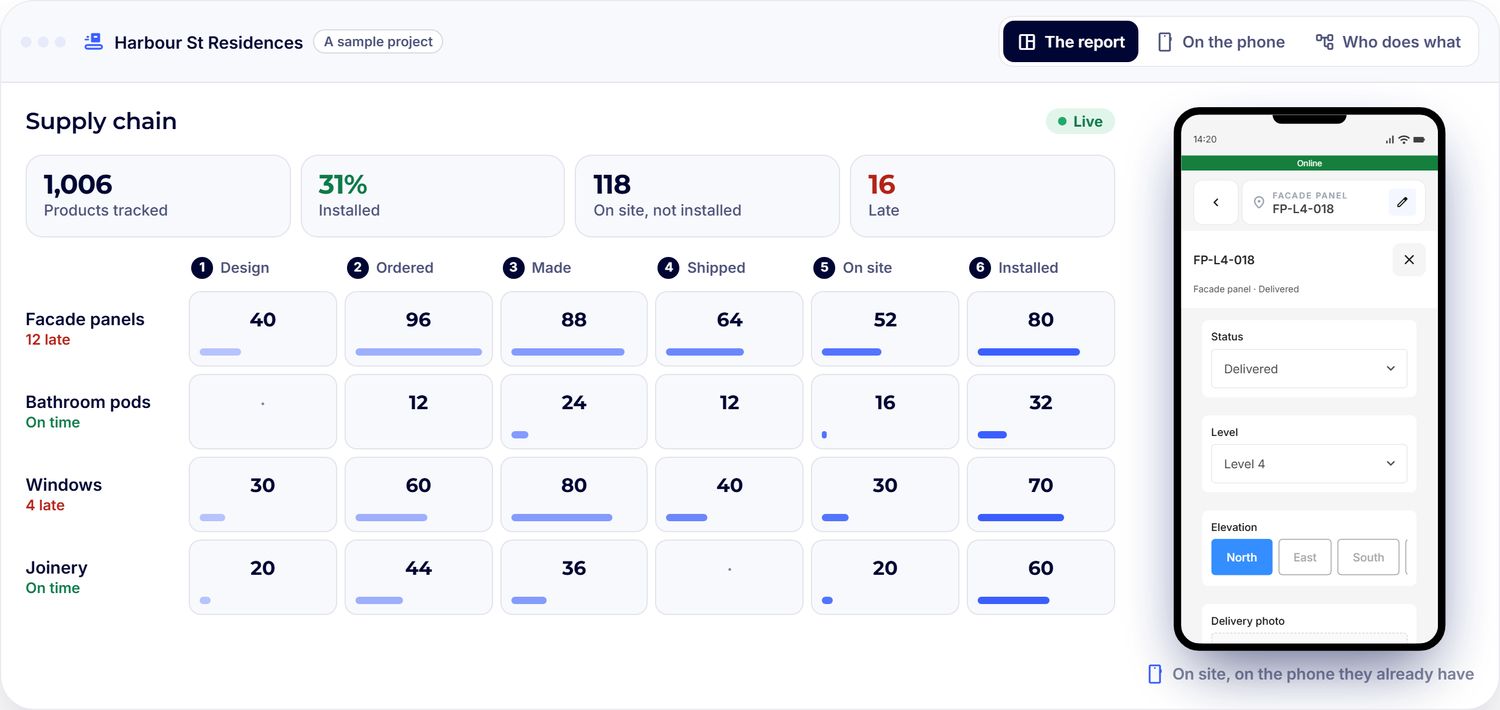
Every item with its own record, from factory to installed. Matrak Supply chain builds it as the job runs.
How a passport is built during a project
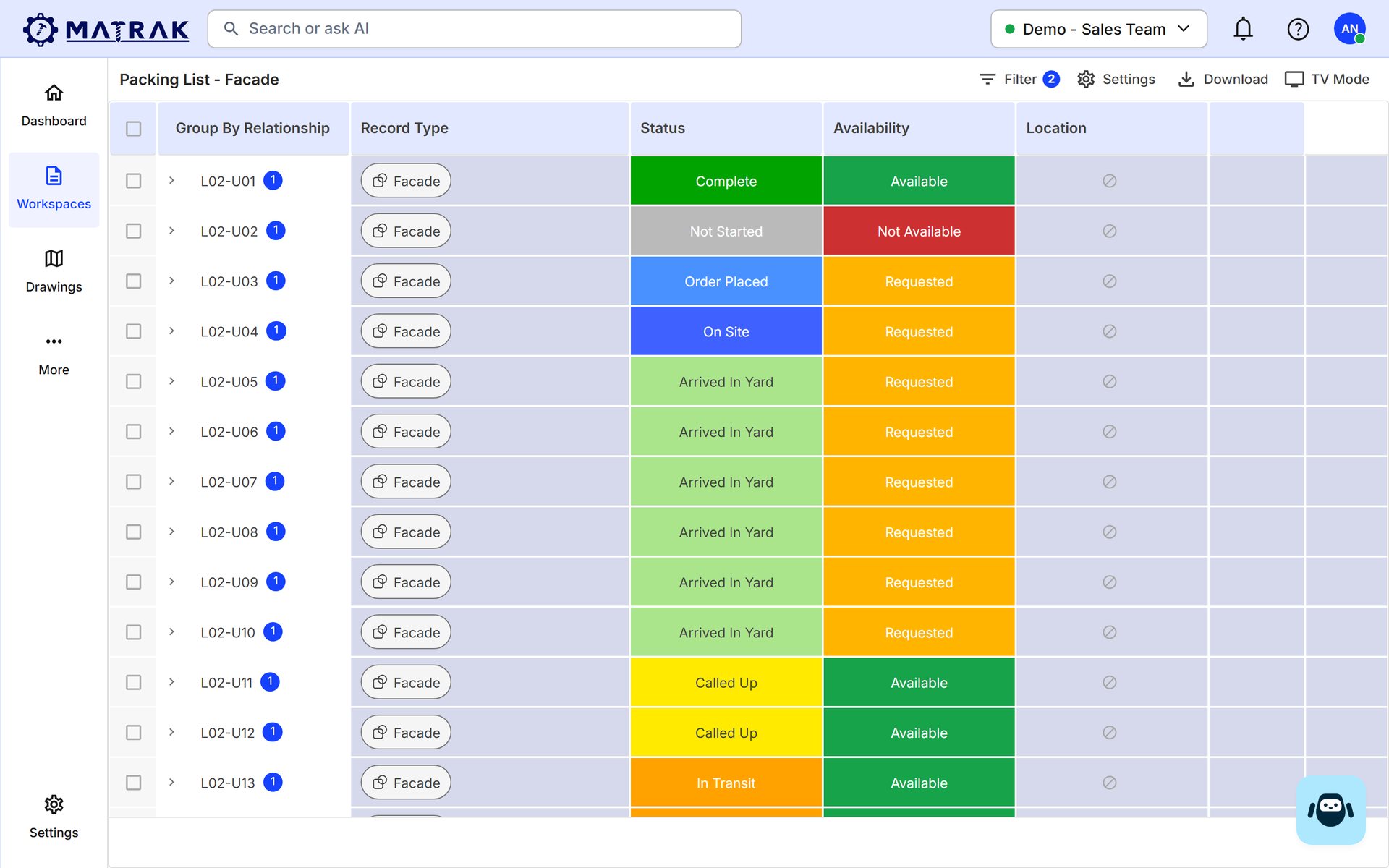
- At the factory each product gets a unique ID and a QR code label.
- The maker attaches the data: materials, performance, certificates, carbon.
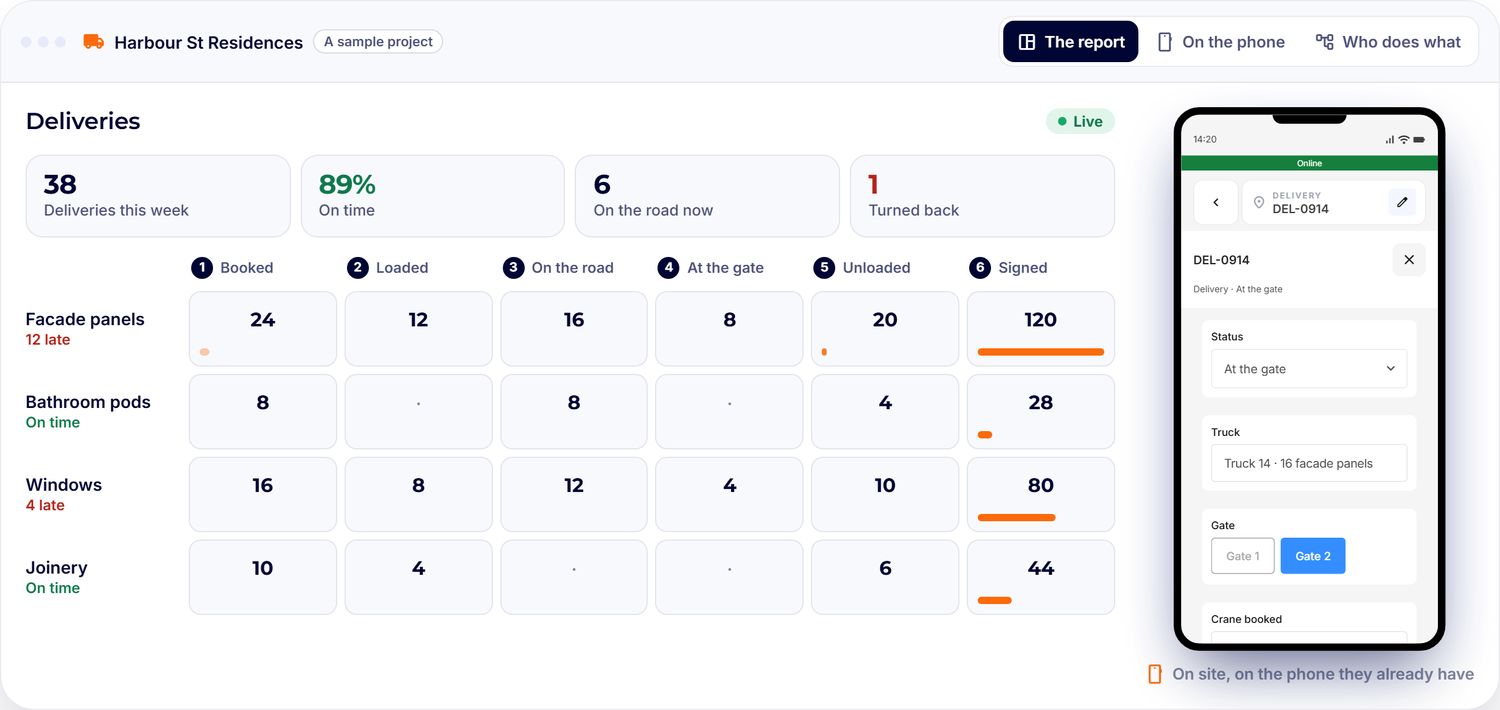
- Every scan adds to the journey: checked, packed, shipped, received.
- On site the installer scans it in and its place in the building is recorded on the drawing.
- At handover the records go to the owner with the building.
The label side of this is covered in QR codes in construction.
Example: one window's passport
| Field | Entry |
|---|---|
| ID | W-0312 |
| Product | Aluminium awning window, 1200 x 1500, double glazed |
| Made by | Example Windows, factory 2, batch 118 |
| Performance | Declared performance and test reports attached |
| Carbon | Environmental product declaration attached |
| Factory check | Passed, with photo |
| Shipped | Container 14, packed on frame 6 |
| On site | Received undamaged, stored on Level 3 |
| Installed | Level 3, Apartment 304, bedroom 1, with photo |
| Care | Warranty and maintenance sheet attached |
Who needs digital product passports?
- Manufacturers selling into the EU. The rules arrive product family by product family. Ask your European customers what they need and when.
- Suppliers to green-rated projects. Ratings and clients want the carbon and materials data, with or without a law.
- Builders. You are the one asked at handover what was installed where.
- Owners. The record is how a facade is maintained, valued and one day reused.
Common mistakes with product passports
- A PDF in a folder. If the record is not tied to the item by a code, it is a brochure.
- One record for a whole order. Panel 37 cracked in transit. Which record says so?
- Data typed twice. The factory's list and the site's list will not match.
- Starting at handover. The journey cannot be rebuilt afterwards. It is recorded as it happens, or not at all.
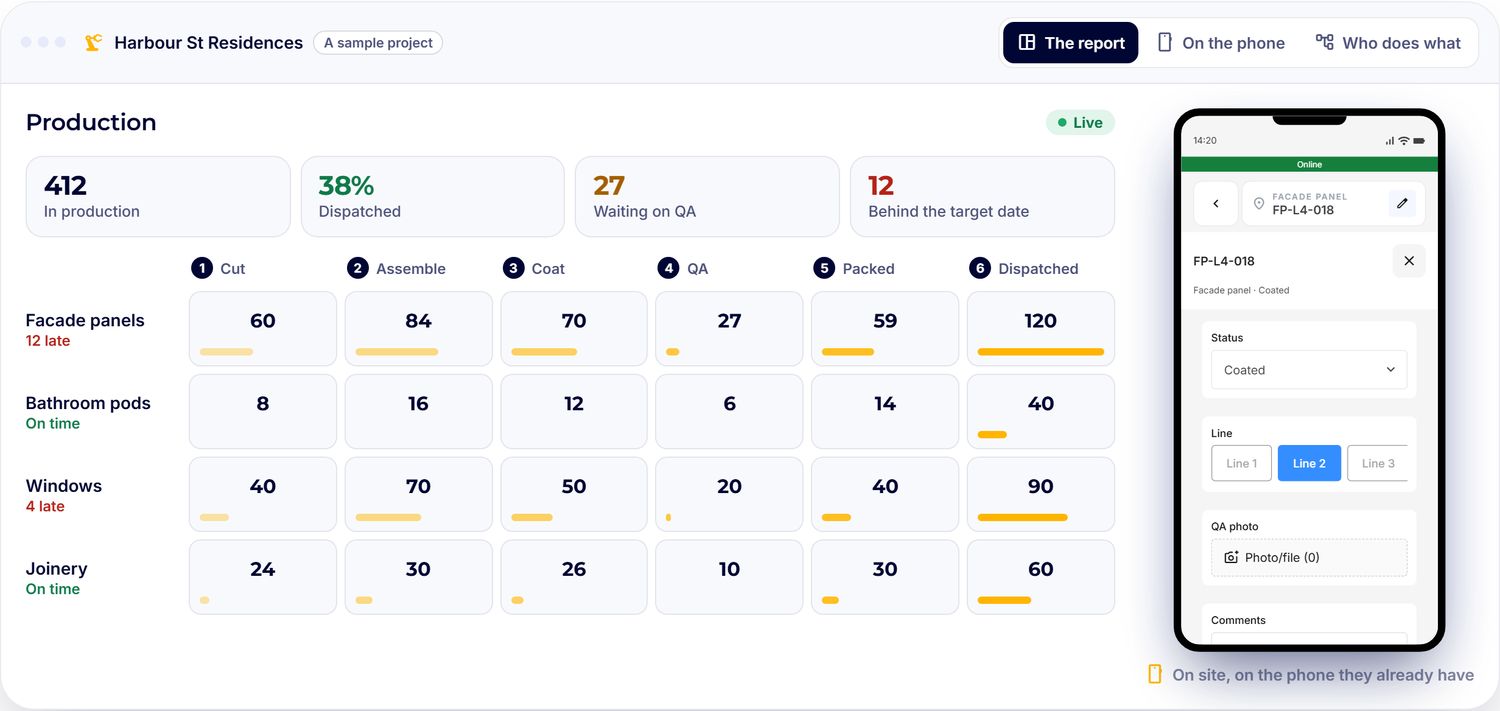
Every item's record, built as the job runs
| Matrak | Spreadsheets and PDFs | |
|---|---|---|
| A list of products with their documents | Yes | Yes |
| One QR code for each product | Yes | No |
| A QA photo kept on each item at the factory | Yes | No |
| Factory, freight company and installer add to the same record | Yes | No |
| Where each item was installed, on the drawing | Yes | No |
| Embodied carbon on every line of the bill | Yes | No |
How Matrak does it. Each product gets one QR code. The factory, the freight company and the installer each scan it, so every item builds its own record from shop drawing to installed, with a QA photo kept on it. Supply chain is $30,000 for one project for a year, 5 supplier companies and 25,000 items included (A$, plus GST).
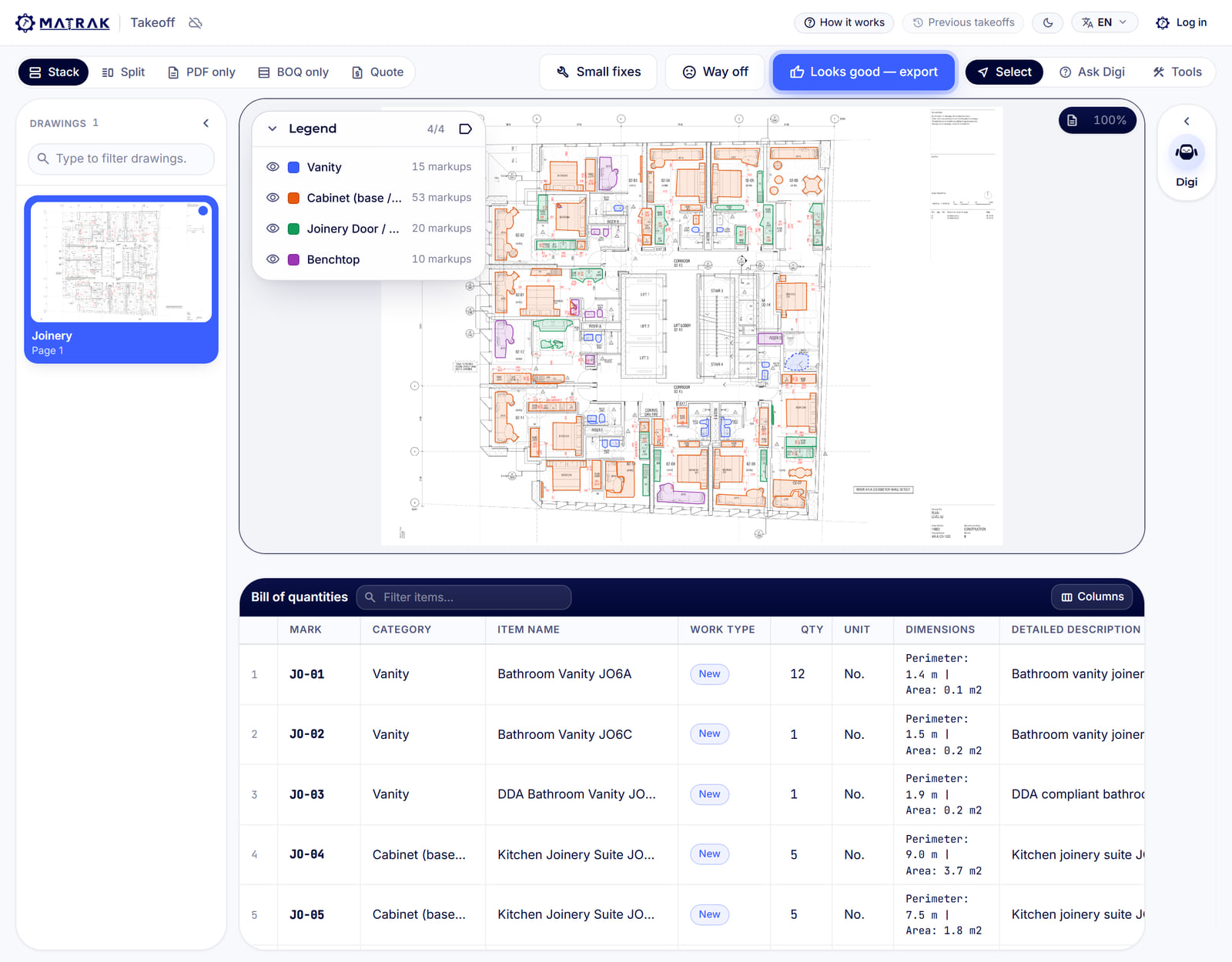
Nothing is typed twice. The product list comes off AI Takeoff's bill of quantities, read from drawings fetched from Procore, Aconex and Autodesk, and every scan and change is kept in a full audit history. Matrak Carbon adds Scope 3 embodied carbon to every line.
Manufacturers can start with Matrak Manufacturing. Weighing up systems? See how Matrak compares.
Frequently asked questions
What is a digital product passport?
A digital product passport is a digital record linked to a physical product by a code on the product. It holds the product's identity, materials, performance, environmental data and care instructions, and anyone who handles the product can read it.
Is a digital product passport mandatory for construction products?
In the European Union it is being phased in by product family under the revised Construction Products Regulation. Australia, New Zealand, Canada and the UK do not require one by law. Check the rules for your product and market, because the dates differ.
What is the difference between a digital product passport and a material passport?
A digital product passport covers one product and starts with the manufacturer. A material passport covers a building or a building part and records what is in it and where, so it can be maintained and reused. The second is built from the first.
How is a digital product passport accessed?
By scanning a data carrier on the product, usually a QR code, with a phone. The code opens the product's record online.
What is the difference between a digital product passport and an EPD?
An environmental product declaration (EPD) is a verified report of a product's environmental impact over its life. A digital product passport is the wider record for one product, and the EPD is one of the documents it can hold.