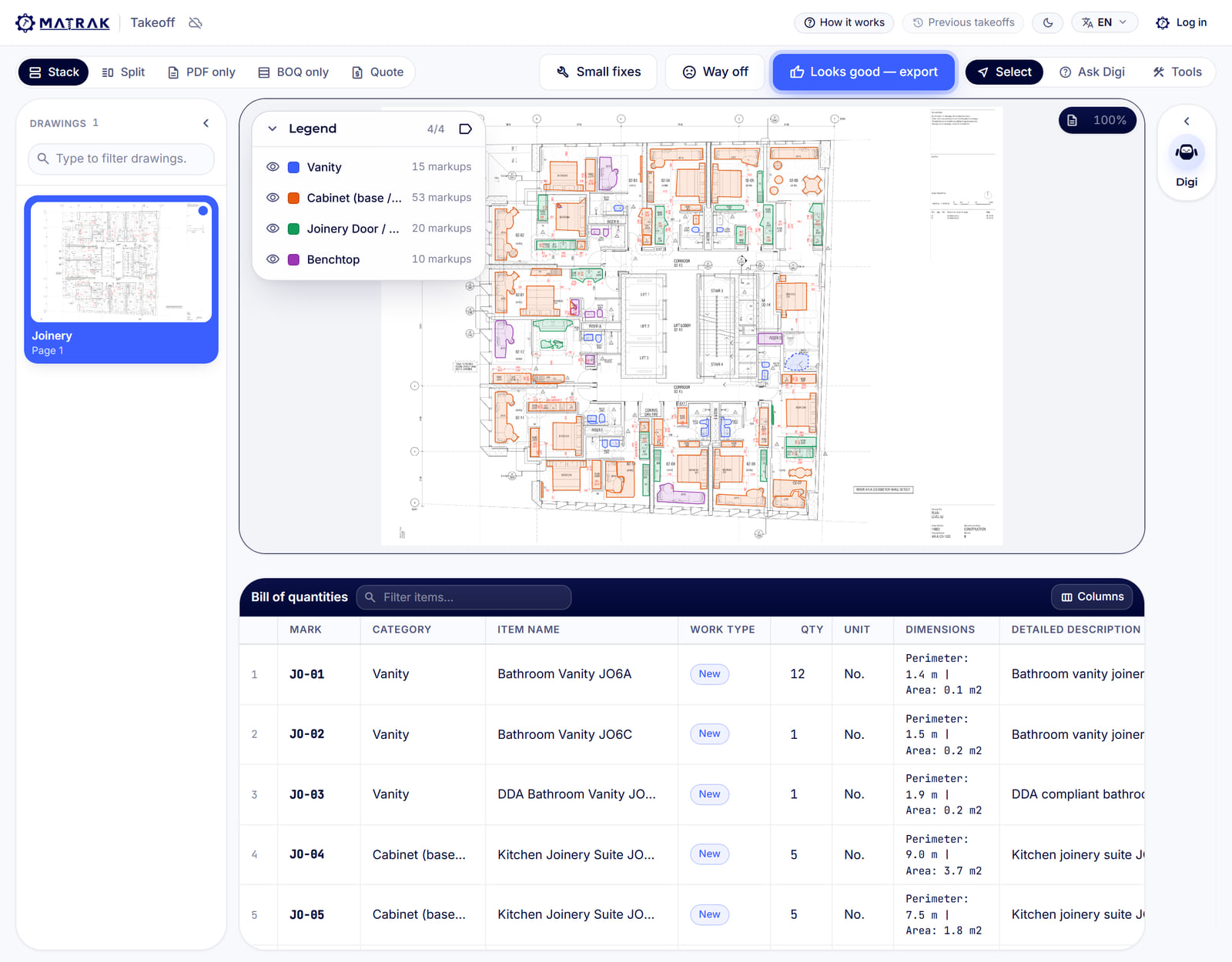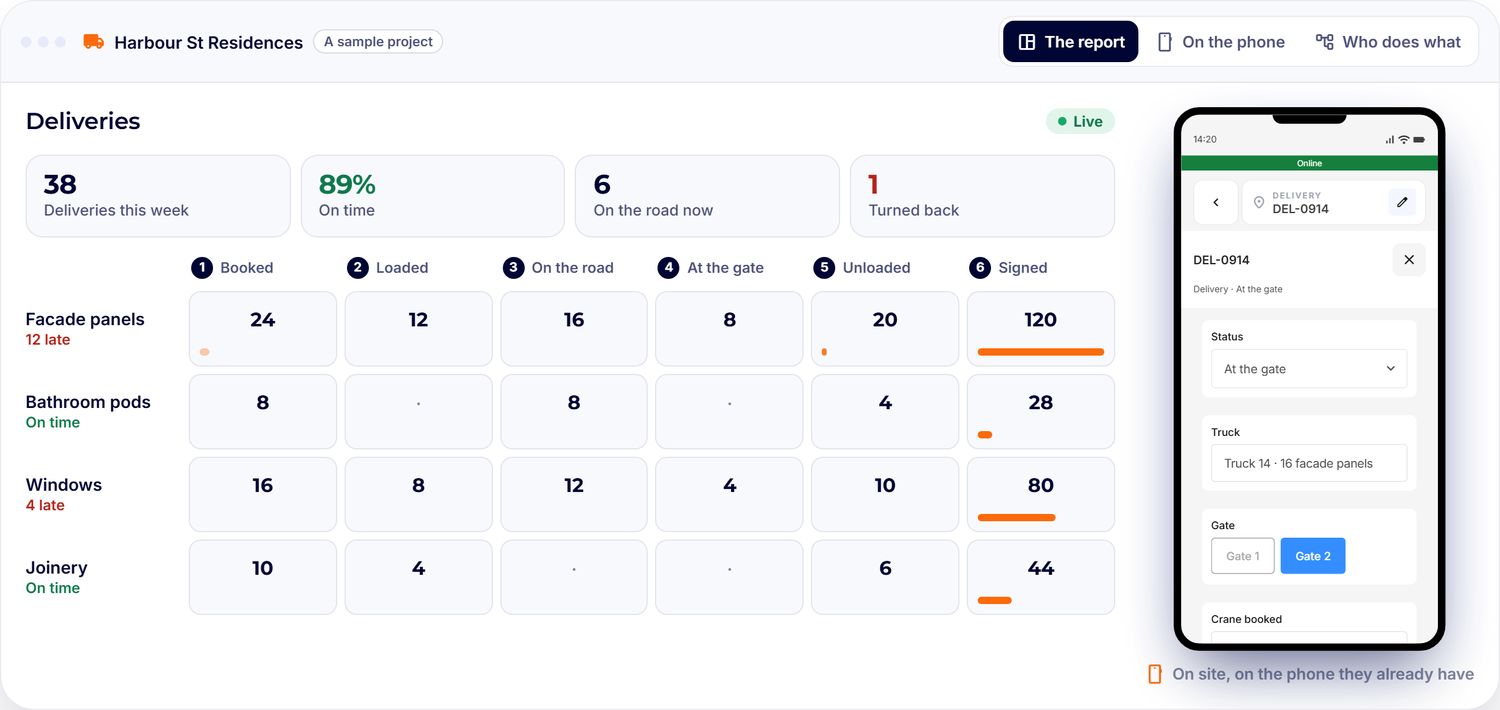
An ITP in construction is an inspection and test plan (ITP, sometimes ITR): a list of every inspection and test a piece of work must pass, in the order it is built. Each line says what is checked, the pass mark, who checks it, and whether work stops until someone signs. A completed ITP is your proof that the work was built to the drawings, the specification and the standards.
On an Australian commercial job there is normally one ITP for each trade (concrete, waterproofing, fire stopping, facade), written by the subcontractor, approved by the head contractor, and filled in once for every lot: each pour, each bathroom, each level. Each completed copy is the inspection and test record (ITR).
What is in a construction ITP?
Every line has the same few columns:
- Activity. The step being checked, in build order (substrate ready, primer, membrane coat 1, flood test).
- Reference. Where the pass mark comes from: a drawing number, a spec clause, a manufacturer's data sheet or an Australian Standard.
- Acceptance criteria. The pass mark itself, as a tolerance or a yes or no.
- Inspection type. Hold point, witness point, or a review of the record.
- Who signs. The subcontractor, the head contractor, and anyone outside the two: the engineer, the building surveyor or certifier, the client's superintendent.
- Record. What is kept as evidence: a signed checklist, photos, a test report, a delivery docket.
What is the difference between a hold point and a witness point?
A hold point in construction is a stop sign. Work must not go past it until the named person has inspected and released it in writing. Hold points sit just before work gets covered up or becomes expensive to undo: before a pour, before the membrane is tiled over, before the ceiling is closed.
A witness point is an invitation. The named person is told in advance and may come to watch. If they do not turn up after proper notice, work carries on and the subcontractor records the check themselves.
| Hold point | Witness point | |
|---|---|---|
| Can work continue without the inspector? | No. Work stops until it is released. | Yes, once the agreed notice has been given. |
| Typical notice | Set by the contract, often 24 to 48 hours | Set by the contract, often 24 hours |
| What is kept | A signed release, with date and name | The notice given, plus the subcontractor's own record |
| Examples | Reinforcement before a pour, membrane before tiling, fire stopping before the ceiling closes | Slump test, first-coat application, a trial panel |
Notice periods and who can release a hold point come from your contract. Government specifications, such as Transport for NSW's quality specification Q6, define hold points formally and schedule them for each work type.
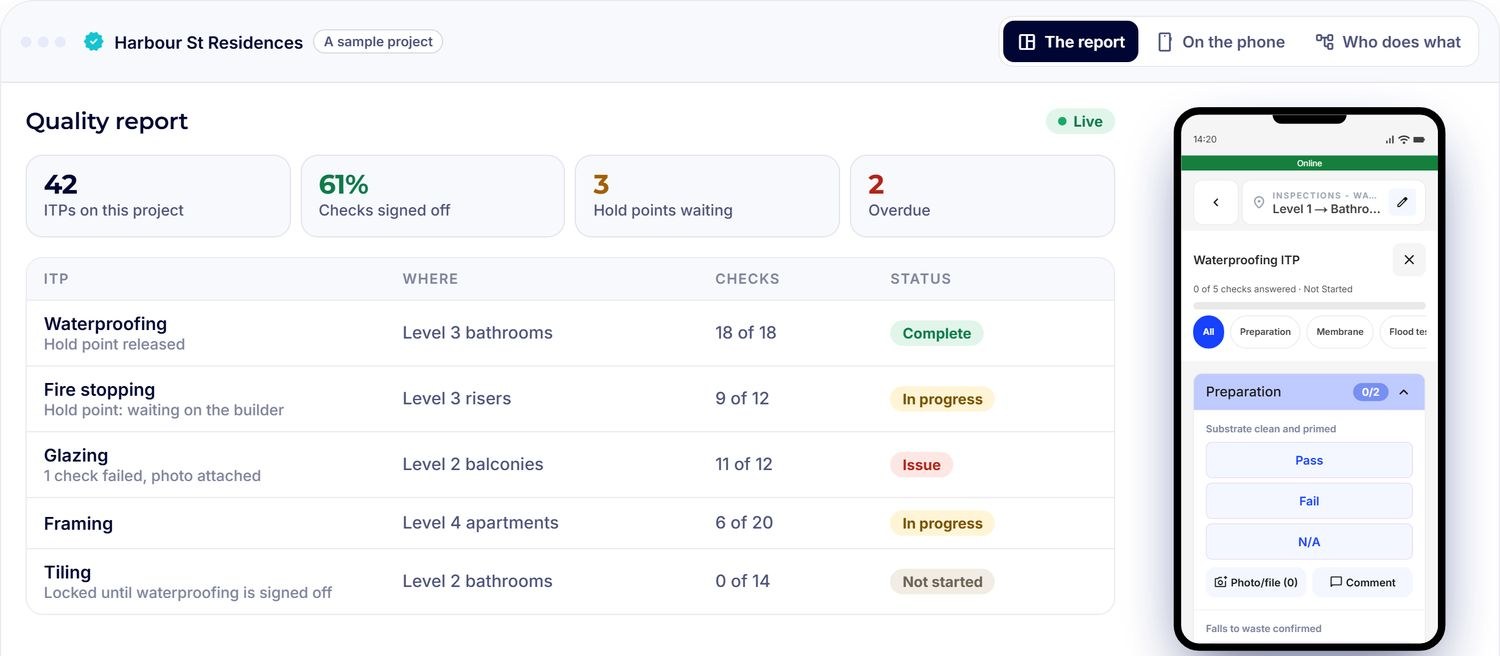
20 hours a week of ITP admin, gone. Matrak Quality builds every ITP from your drawings and chases the sign-offs for you.
Who writes, approves and signs an ITP?
- The subcontractor writes the ITP for their trade, because they know the method. They also do the first inspection of every line.
- The head contractor reviews and approves the ITP before work starts, adds the hold and witness points they want, and signs those points on site.
- Third parties sign the points that are theirs: the structural engineer before a pour, the building surveyor or certifier at mandatory stages, the waterproofing manufacturer where a warranty depends on it.
- The client's representative may ask for their own witness points in the contract.
One ITP covers the whole trade and is filled in once per lot. A 200-apartment job with one waterproofing ITP ends up with 200 or more completed records, one for each wet area.
Worked example: a waterproofing ITP for an apartment bathroom
Your own criteria come from your specification, the membrane manufacturer's data sheet and AS 3740 (waterproofing of domestic wet areas).
| Item | Activity | Reference | Acceptance criteria | Type | Who signs | Record |
|---|---|---|---|---|---|---|
| 1 | Approved materials and applicator | Specification, data sheets | Membrane system as specified, applicator licensed where the state requires it | R | Subcontractor, head contractor | Data sheets, licence |
| 2 | Substrate ready | Drawings, AS 3740 | Clean, dry, falls to waste as drawn, sheet joints and penetrations finished | H | Head contractor | Checklist, photos |
| 3 | Primer, bond breakers and fillets | Manufacturer's data sheet | Applied at every junction and penetration | R | Subcontractor | Photos |
| 4 | Membrane coats | Data sheet, drawings | Number of coats and thickness as the data sheet, upturns and extents as drawn | W | Subcontractor, head contractor | Photos, batch numbers |
| 5 | Cure, then flood test | Specification | Cured for the stated time, flooded for the specified period, no leaks below | H | Head contractor | Test record, photos |
| 6 | Release to tiler | This ITP | All lines above signed, defects closed | H | Head contractor | Signed ITP |
H hold point: work stops until it is released. W witness point: the inspector is given notice and work can carry on. R review: the record is checked.
Free ITP template
Take our ITP template for Excel: the columns above on a blank sheet that prints on A4, plus the waterproofing example filled in. No sign-up. Here it is started for a concrete pour:
| Item | Activity | Reference | Acceptance criteria | Type | Who signs | Record |
|---|---|---|---|---|---|---|
| 1 | Reinforcement before the pour | Structural drawings | Bar size, spacing, laps and cover as drawn | H | Engineer, head contractor | Inspection record, photos |
| 2 | Slump test on delivery | Specification | Slump within the specified range | W | Subcontractor | Delivery docket, test result |
| 3 | Curing | Specification | Cured by the specified method for the specified time | R | Subcontractor | Photos, dates |
A template still has to be filled in for every room. Matrak builds and files them from your drawings: see your price. More formats: inspection and test plan template.
What are the common mistakes with ITPs?
- Signed in the site office on Friday. An ITP filled in from memory proves nothing. Sign each line when the check is done, at the work, with a photo.
- Vague pass marks. 'Installed to spec' is not a criterion. Name the drawing, the clause or the tolerance.
- Too many hold points. If everything is a hold point, people stop respecting them. Keep them for work that gets covered up.
- One ITP for the whole building. Records must be per lot (room, pour, level), or you cannot show which bathroom was tested.
- Work covered before release. The costliest mistake. If the hold point was missed, raise a non-conformance report straight away.
- Records you cannot find at handover. Paper ITPs in a ute are the reason handover packs are late.

Paper ITPs or ITP software?
| Paper or spreadsheet | ITP software | |
|---|---|---|
| Filling in | Clipboard on site, typed up later | On the phone at the work, with photos |
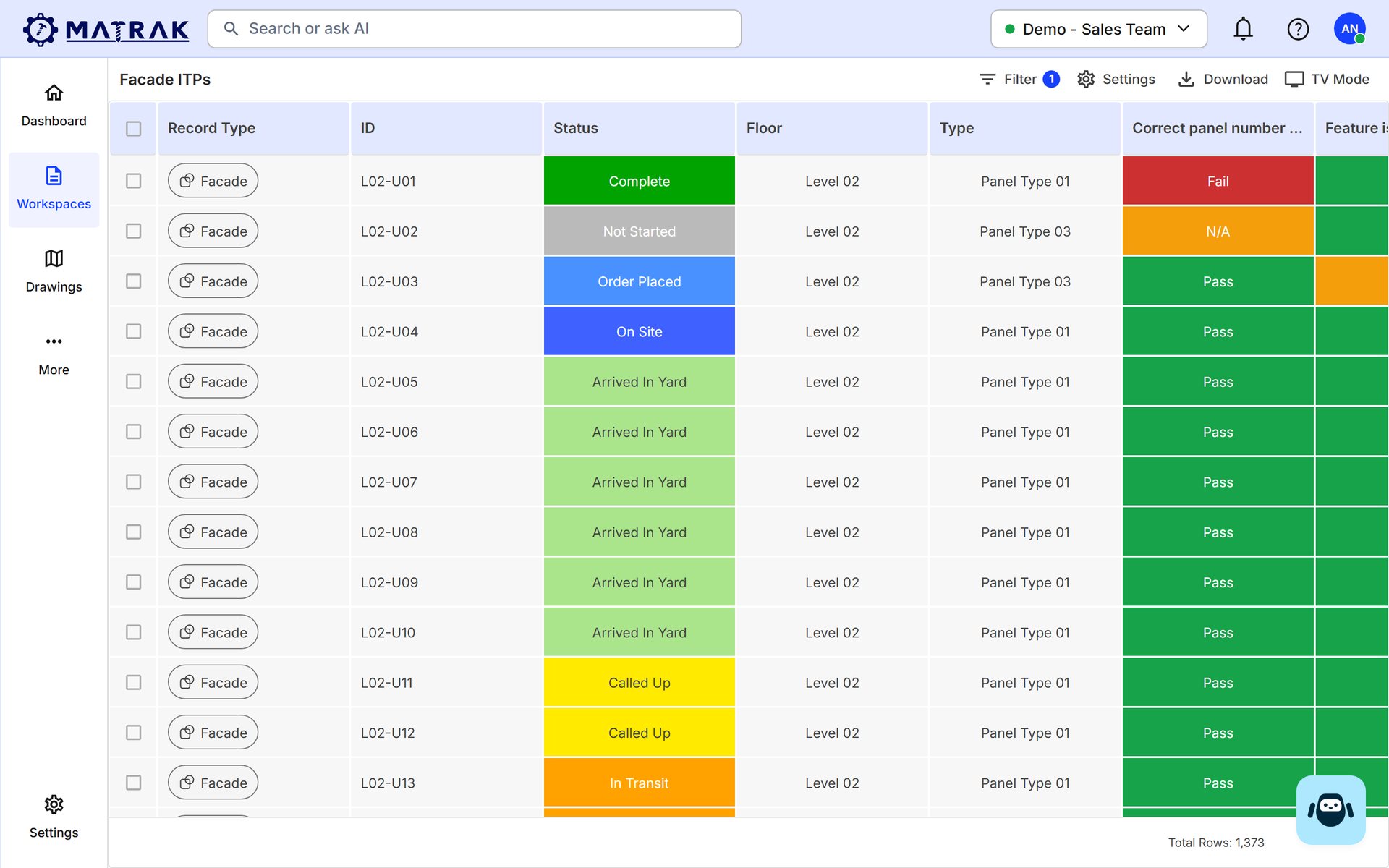
| Hold points | Rely on a phone call and memory | Work shows as waiting, and the signer is notified |
| Status of the job | Count the folders | Live by level, room and trade |
| Subcontractors | Hand their sheets in at the end | Sign on their own phones as they go |
| Handover pack | Weeks of scanning and chasing | Exported from the records already there |
Paper works on a small job with one or two trades. Past that, the cost is the chasing: who has signed, which rooms are open, where the evidence is. See also quality assurance vs quality control. Comparing ITP software? See how the quality systems compare.
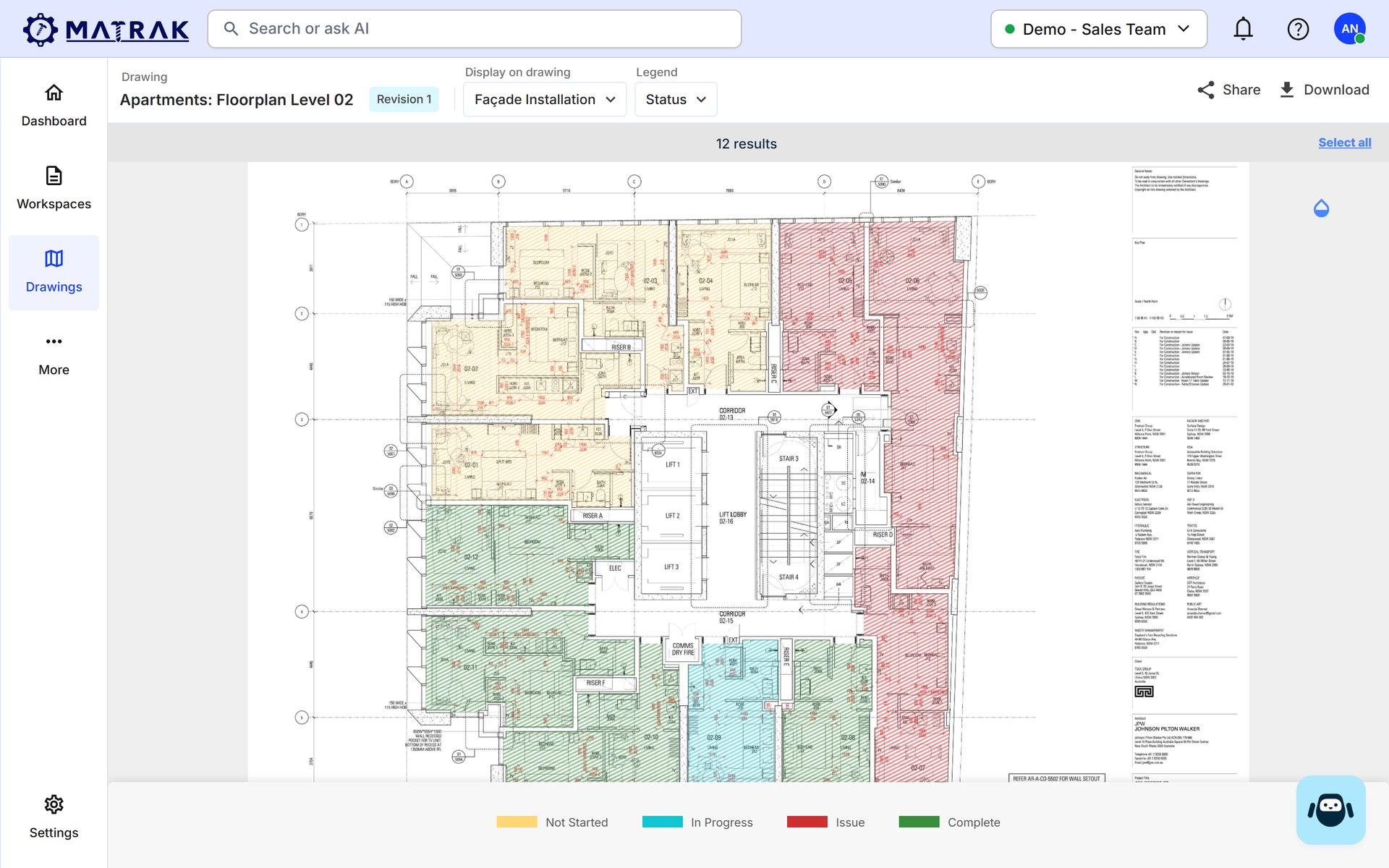
How Matrak does it. Matrak Quality is ITP software that builds your ITPs from your drawings. Trades answer each check on the phone with a photo, hold points make work wait for the right sign-off, and the drawing colours every room by its status. $18,000 for one project for a year, 50 subcontractor companies included (A$, plus GST).
Why it is less work. Drawings are fetched from Procore, Aconex and Autodesk, new revisions are picked up as they land, and every change is kept in a full audit history.
Handover without the 3am panic. Every check, photo and sign-off is already filed against its room.
Frequently asked questions
What does ITP stand for in construction?
ITP stands for inspection and test plan. It lists the inspections and tests a piece of work must pass, the pass mark for each, who checks it and where work must stop for a sign-off.
Is an ITP the same as an ITP checklist?
Not quite. The ITP is the plan: every check, its pass mark and who signs. An ITP checklist is the form filled in on site for one lot against that plan. Many teams combine the two into one form per room or pour.
Who is responsible for preparing an ITP?
The subcontractor doing the work normally prepares it, and the head contractor reviews and approves it before work starts. The head contractor is still responsible to the client for the quality of the whole job.
Is an ITP a legal requirement in Australia?
An ITP is usually a contract and quality system requirement, not something an Act asks for by name. Most commercial contracts and specifications require one, and it is how you show that mandatory inspections and standards were met. Check your contract.
How many hold points should an ITP have?
As few as the work needs. Put a hold point where the next step covers up the work or makes a mistake expensive to fix, and use witness points or ordinary checks for the rest.
ITP meaning in construction, in one line
What does ITP mean in construction? An ITP (inspection and test plan) in construction is the agreed list of checks a piece of work must pass, with who signs each one. The ITR meaning in construction is inspection and test record: the filled-in copy for one lot.