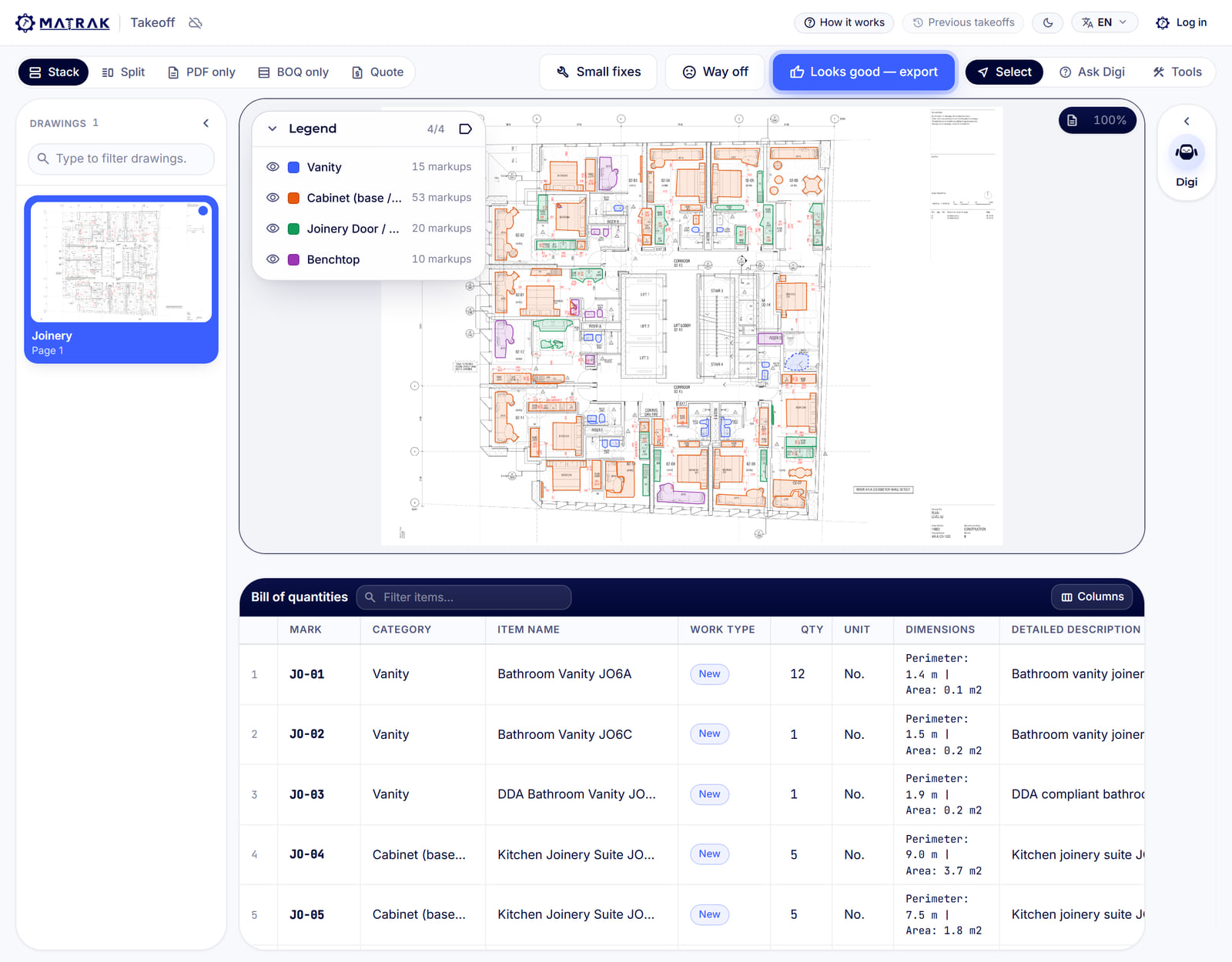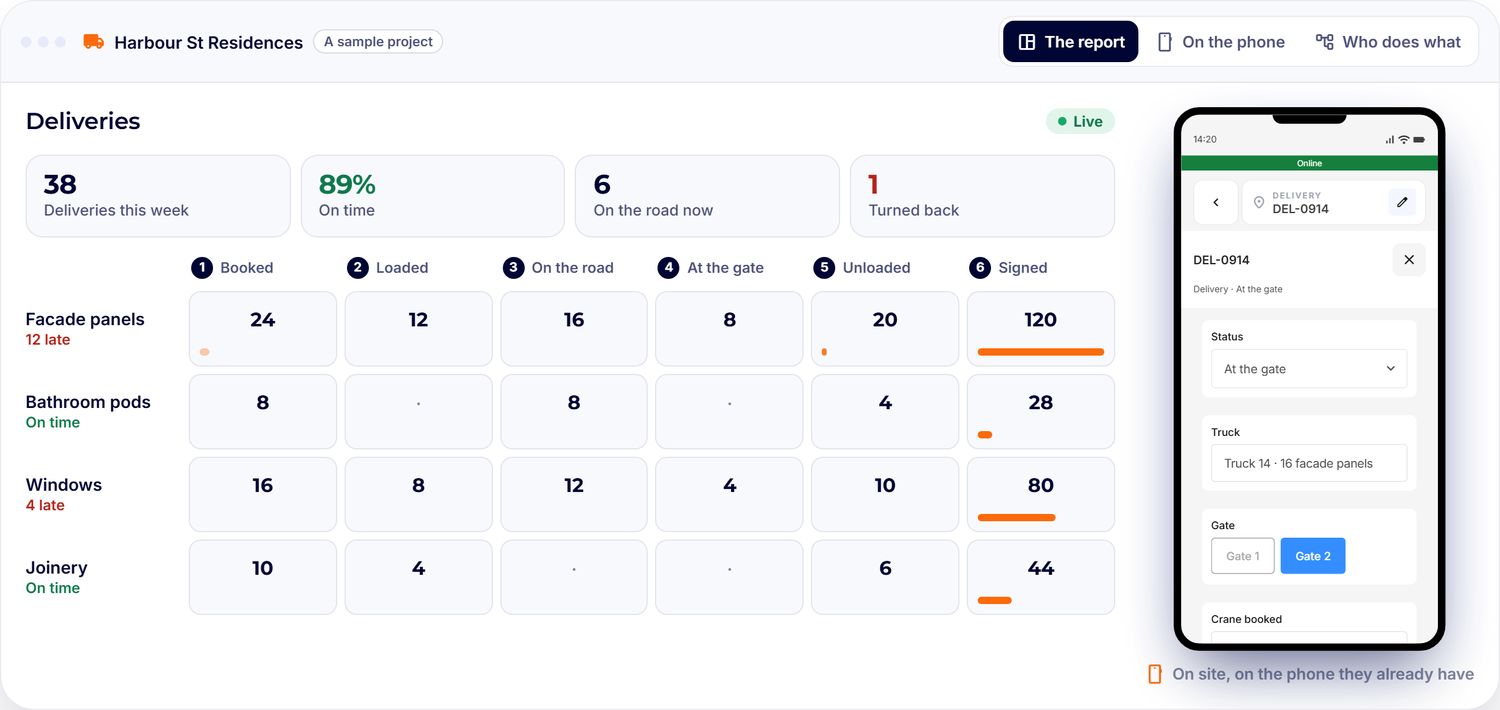
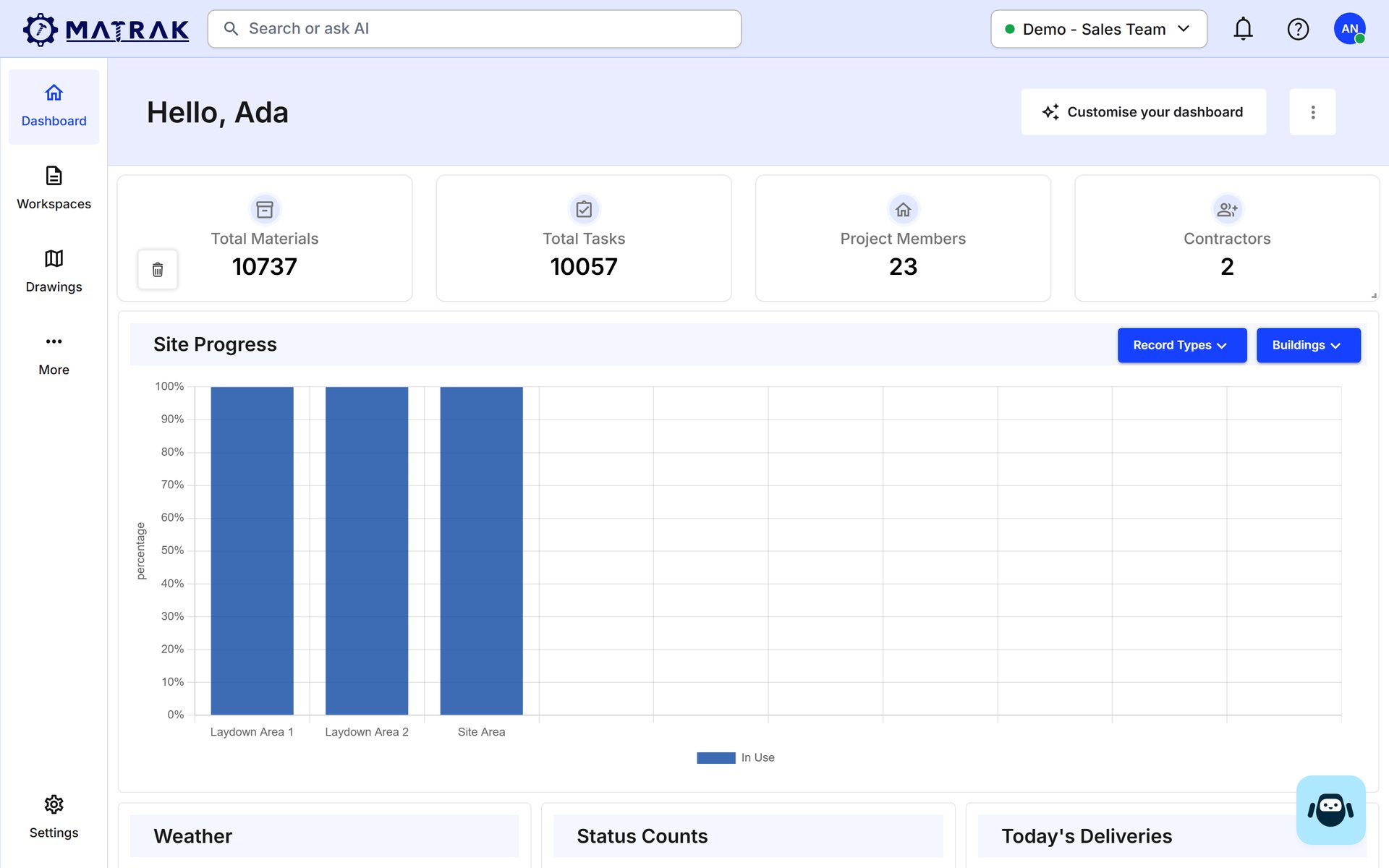
A construction daily report template is a short form the site supervisor fills in at the end of each day: the weather, who was on site, what work was done and where, what was delivered, what held the job up and what was instructed. Our free Excel version is below.
The same record is called a construction daily log in the United States, a daily site report in the UK and a site diary in Australia. For why it matters and how long to keep it, see the construction site diary.
What goes in a construction daily report?
| Section | What to fill in |
|---|---|
| Header | Project, date, report number, who wrote it |
| Weather | Morning and afternoon, temperature, time lost |
| Crews on site | Each company, how many workers, where they worked |
| Work done | The activity, the location and how far it got |
| Deliveries | What arrived, from whom, the docket number, any damage |
| Plant and equipment | Major plant used, breakdowns and standing time |
| Delays, issues and incidents | What stopped or slowed work, for how long, who was told |
| Instructions and visitors | Verbal instructions, inspections, who came to site |
| Photos | Three to ten, each with a location |
Construction daily report example
One day on a mid-rise apartment job. Notice the times, the quantities and the names.
| Section | Entry |
|---|---|
| Weather | Fine until 2:15 pm, then rain. 1.5 hours lost, external trades only |
| Crews on site | Concrete 9, formwork 12, electrical 6, plasterer 8 |
| Work done | Level 6 slab poured, 180 m3, finished 1:40 pm. Level 2 linings fixed in 6 of 12 apartments |
| Deliveries | Plasterboard, 14 pallets. Two sheets damaged on pallet 9, photo 4 |
| Plant | Tower crane stood down 2:15 pm to 3:45 pm |
| Delays | Level 4 rough-in waiting on an answer about the riser location. Half a day, two workers |
| Instructions | Client's representative asked for the Level 2 corridor ceiling to be lowered 50 mm. Told to confirm in writing |
| Inspections | Engineer inspected Level 6 reinforcement at 7:10 am and released the pour |
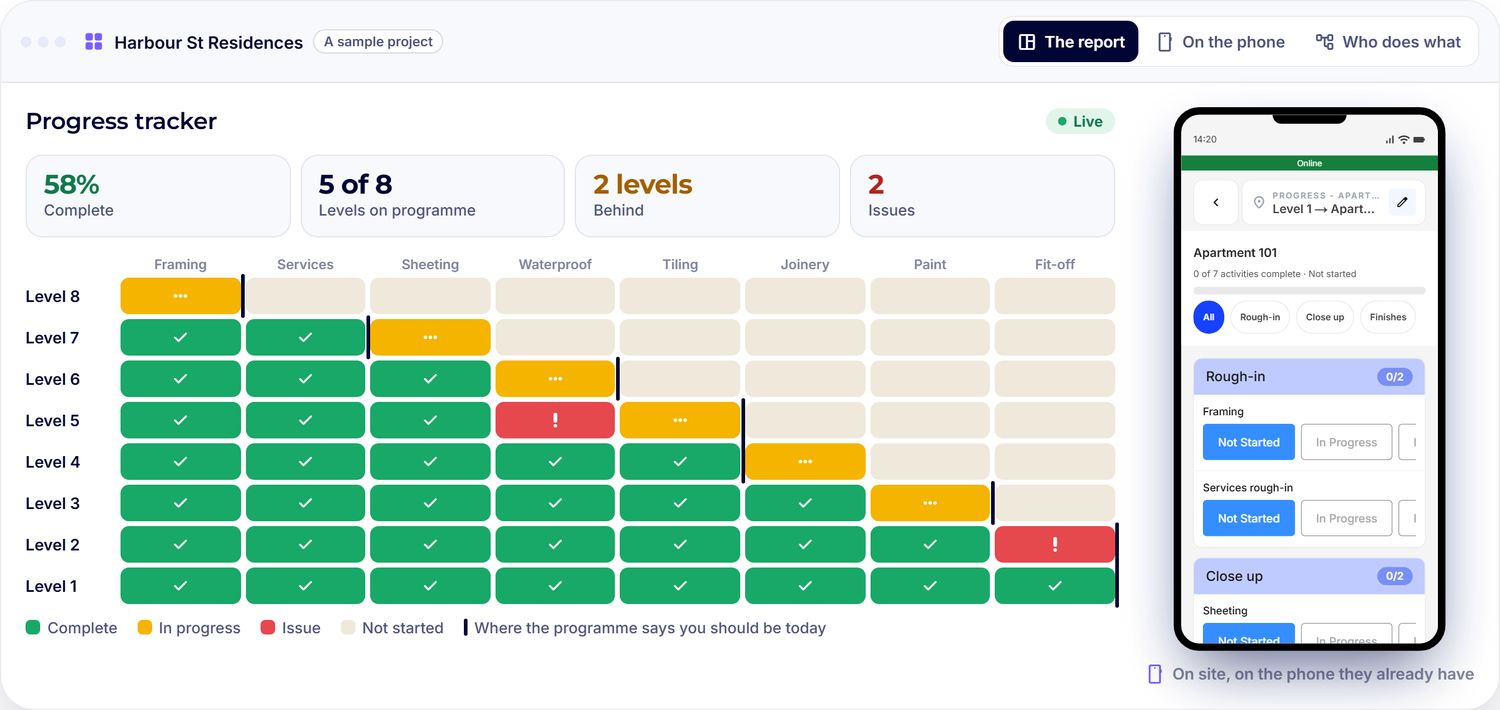
The record of work done, written by the work. With Matrak Progress, trades mark work done on their phone and the day's progress is already there.
Construction daily log or daily report?
They are the same form. Some US contractors use daily log for the superintendent's own running record and daily report for the copy sent to the owner. Subcontractors send their own daily report to the general contractor: crew, work done, and anything that held them up.
How to fill it in in ten minutes
- Start it at 7 am. Weather and crews go in at the morning walk, not at 5 pm.
- Note things as they happen. A delivery, a visitor, an instruction: one line each, with the time.
- Take the photos on your afternoon walk. The same spots each day show progress best.
- Write facts, not opinions. 'Formwork crew left at 1 pm' not 'formworkers slack again'.
- Finish before you leave. Tomorrow you will not remember today.
Free construction daily report template
Take our construction daily log template for Excel: the sections above on a blank form that prints on A4, with the example filled in on a second sheet. In the UK it works as a site report template without changing a word. No sign-up.
| Crews on site | Workers | Where they worked |
|---|---|---|
| Company or trade | ||
| Company or trade | ||
| Company or trade |
Common mistakes with daily reports
- Written on Friday for the whole week. Five days from memory is one day of facts.
- 'Work continued'. Where, by whom, how far? If it cannot be checked, it is not a record.
- Delays with no cause. 'Lost two hours' helps nobody. 'Lost two hours waiting for the pump' supports a claim.
- Verbal instructions left out. The instruction you did not write down is the variation you will not be paid for.
- Photos with no location. Name the level and the room.
A late instruction or a change to the drawings belongs in a variation as well: see construction variations.
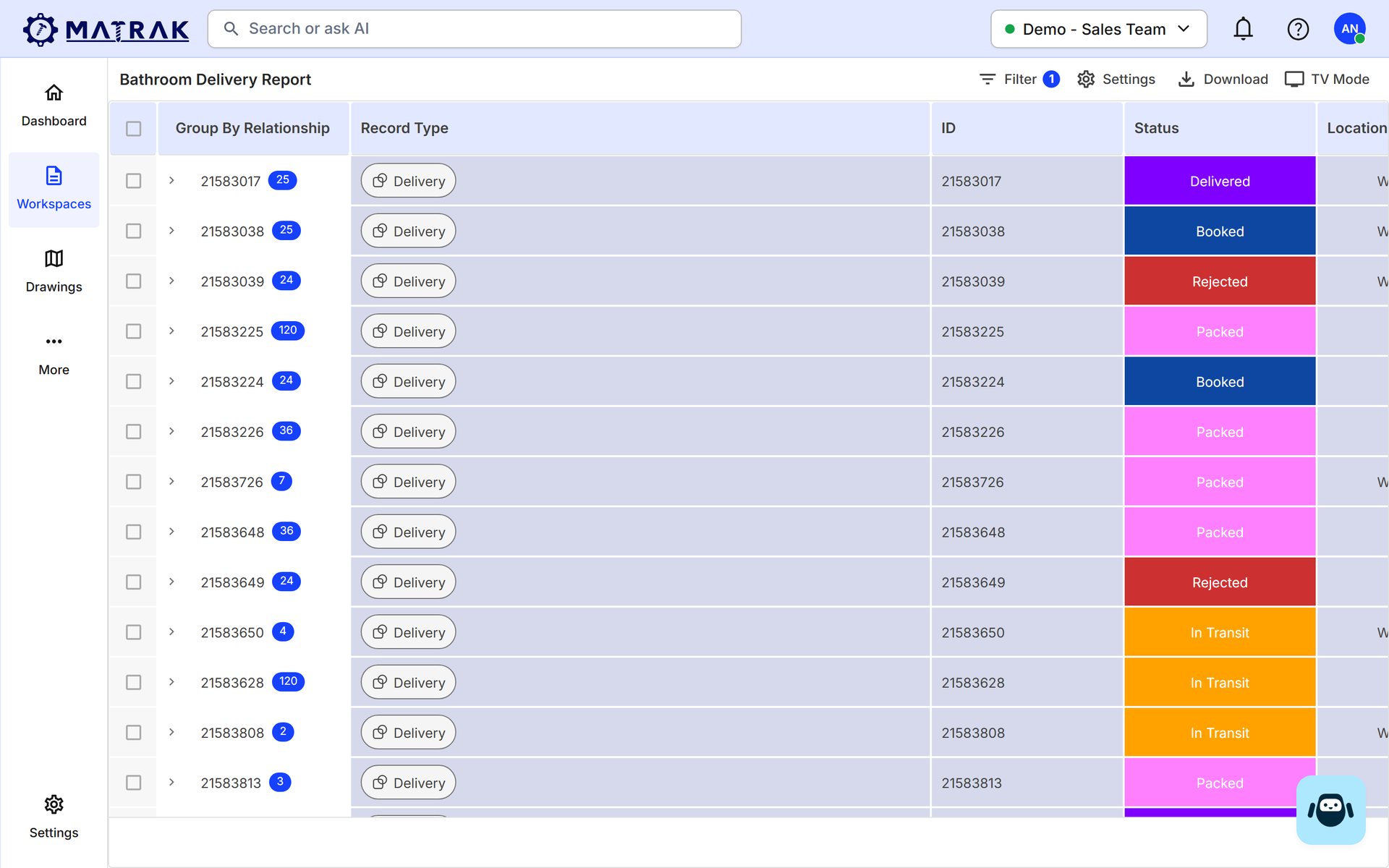
A daily report that fills itself in
| Matrak Progress | Paper or Excel form | |
|---|---|---|
| A dated record of work done, by location | Yes | Yes |
| Trades mark work done on their own phone | Yes | No |
| Progress shown for every level and trade | Yes | No |
| Photos kept against the item or the room | Yes | No |
| Who recorded each update, and when | Yes | No |
| Today's site progress report, with nothing to type | Yes | No |
How Matrak does it. Trades mark work done on their phone as they go, so the board is always today's site progress report, level by level and trade by trade. Your daily report can stick to weather, delays and instructions. Matrak Progress is $12,000 for one project for a year (A$, plus GST).
Why it takes nobody's evening. The levels, areas and trades come from drawings fetched from Procore, Aconex and Autodesk and from your programme, and every update sits in a full audit history.
Looking at site reporting tools? See how Matrak compares. For the weekly or monthly version of this record, use the construction progress report template.
Frequently asked questions
What is a construction daily report?
A construction daily report is a dated record of one day on site: weather, crews, work completed, deliveries, equipment, delays, instructions and visitors. It is written by the person running the site and kept as part of the project record.
Who fills in the daily report?
The site supervisor, foreman or superintendent who ran the site that day. Each subcontractor's supervisor usually fills in one for their own crew and sends it to the head contractor.
What is the difference between a daily report and a progress report?
A daily report records what happened on one day. A progress report compares where the job is with where the programme says it should be, usually each week or month, and is written for the client.
How long should daily reports be kept?
For at least as long as a claim can be made on the project, which can be many years after completion. Check your contract and get advice on the time limits where you build.
Should subcontractors submit daily reports?
Yes, if the subcontract asks for it, and it is good practice anyway. A subcontractor's own record of crew numbers, work done and hold-ups is their best evidence if a delay or a claim is disputed.