Retention in construction is a share of each payment, usually between 3% and 10%, that the client holds back from a contractor, or a contractor from a subcontractor, as security that the work will be finished and the defects fixed. Half is normally paid back at practical completion and the rest at the end of the defects liability period.
It is called retention or retention money in Australia, New Zealand and the UK, holdback in Canada and retainage in the US.
What is retention in construction for?
Construction retention gives the payer something to draw on if the builder leaves work unfinished or defective. It is the contractor's own money, earned and withheld. It is not a discount and it is not a penalty. A head contractor's retention is held by the client, and each subcontractor's is held by the head contractor, often on different dates.
| Where | Usual name | Common practice |
|---|---|---|
| Australia | Retention | 10% of each claim until 5% of the contract sum is held |
| New Zealand | Retention | Set by the contract, often on a sliding scale, and held on trust |
| United Kingdom | Retention | 3% to 5%, halved at practical completion |
| Canada | Holdback | A statutory holdback under provincial lien law, commonly 10% |
| United States | Retainage | 5% to 10%, capped by law in many states |
These are habits, not rules. Your contract sets the rate, the cap and the release dates, and local law can add to it: New South Wales, for example, requires head contractors on larger projects to hold subcontractors' retention money in a trust account.
Worked example: how retention builds up
A $1,000,000 subcontract. Retention is 10% of each claim until 5% of the contract sum, $50,000, is held.
| Claim | Work claimed | Retention this claim | Retention held in total | Paid |
|---|---|---|---|---|
| 1 | $200,000 | $20,000 | $20,000 | $180,000 |
| 2 | $200,000 | $20,000 | $40,000 | $180,000 |
| 3 | $200,000 | $10,000 | $50,000, the cap | $190,000 |
| 4 | $200,000 | $0 | $50,000 | $200,000 |
| 5 | $200,000 | $0 | $50,000 | $200,000 |
| Practical completion | $25,000 released | $25,000 | $25,000 | |
| End of defects liability period | $25,000 released | $0 | $25,000 |
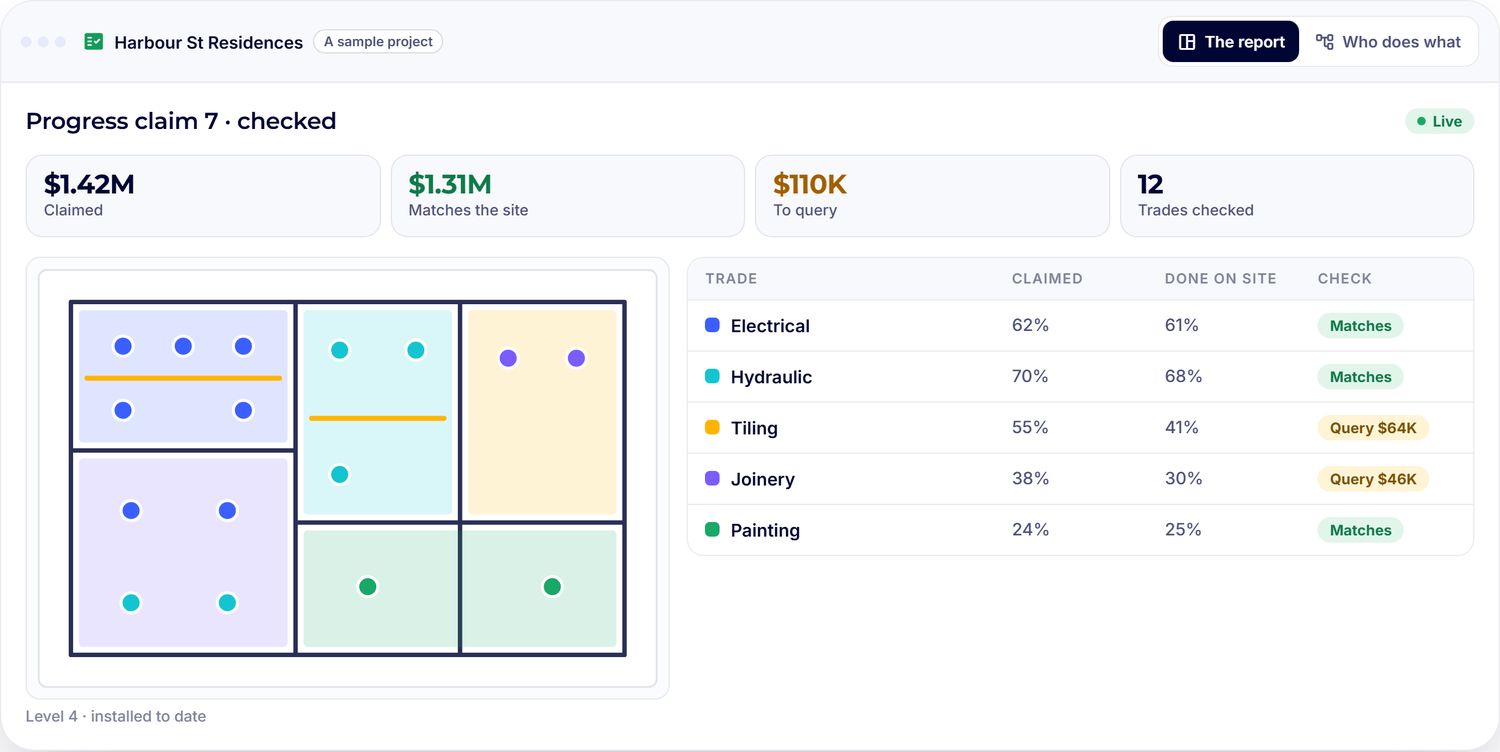
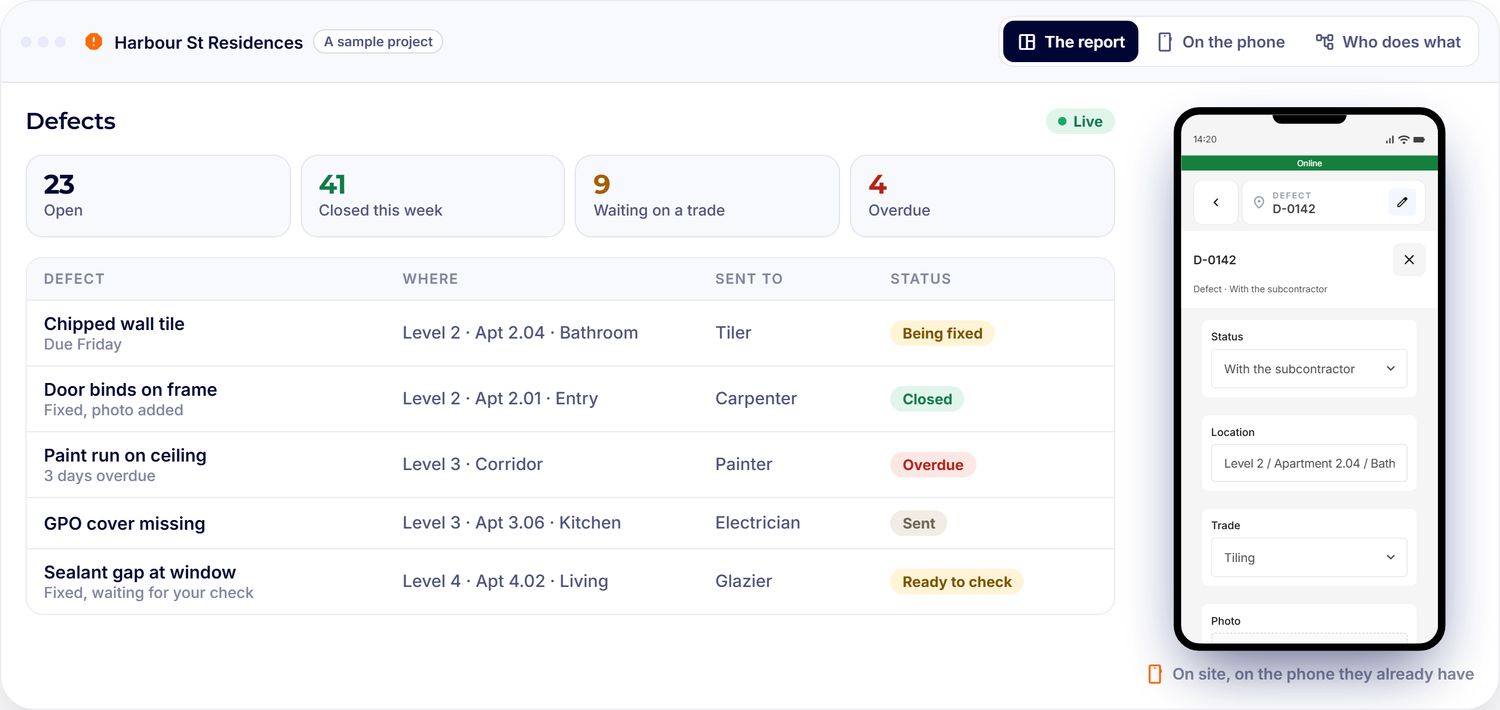
Your retention comes back when the defects are closed. Matrak Defects sends each one to the right trade and shows it fixed, with a photo.
When is retention released?
- The first half at practical completion, called substantial completion in the US and Canada.
- The second half at the end of the defects liability period, often 12 months later, once the defects are fixed.
Retention release is not automatic under most contracts. You usually have to claim it, in a progress claim or in writing, on or after the date. Put both dates in your calendar on day one.
How to get your retention money back
- Read the clause before you sign. Rate, cap, release dates, and whether a bank guarantee can replace cash.
- Track it on every claim. Retention held this claim and in total, on your progress claim.
- Close your defects fast, with proof. A dated photo of each fix, against its location.
- Claim each half in writing on its date.
- Check whose completion counts. A subcontract can tie your release to the whole project's practical completion, months after your own work is done.
- Keep the handover records. The signed defects list is your evidence.
- Know who holds it. On a big job your retention may sit with the head contractor, the client or a trust account. Ask which, and in whose name.
- Chase early. Where retention is not held on trust it is hard to recover if the payer goes under.
Alternatives to cash retention
Many contracts accept a bank guarantee or an insurance bond for the same amount, which keeps the cash in your account. Some clients use project bank accounts or retention trust schemes. Ask before you sign: it is easier to swap than to recover.
Retention and defects in software
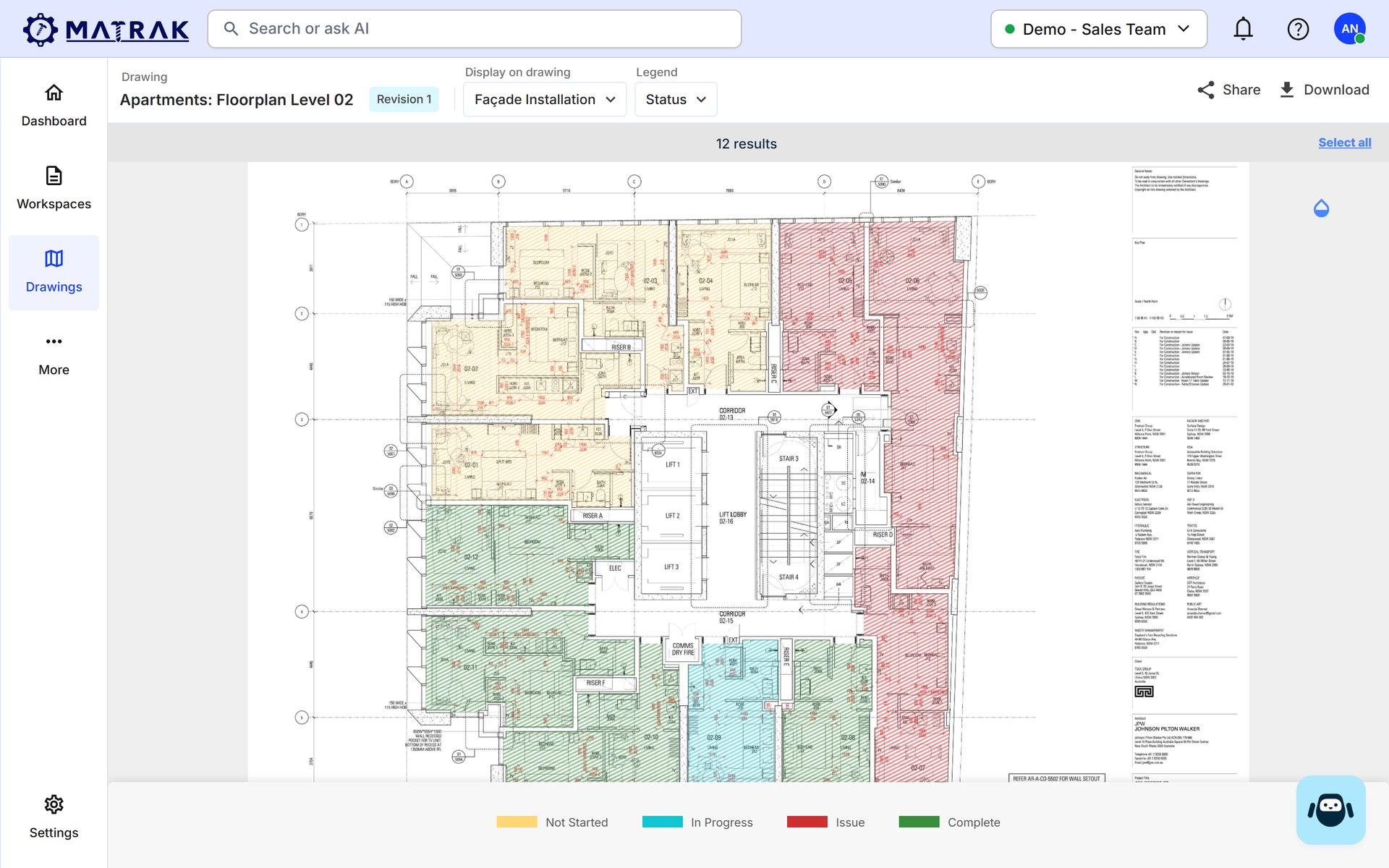
How Matrak does it. Retention comes back once the defects are closed. Matrak Defects pins each defect on the drawing, sends it to the right trade with a due date and keeps the photo of the fix. Matrak Claims checks each progress claim against what is done on site: $400 a month with 8 AI credits included (A$, plus GST).
Why the release is not argued. Every defect keeps its owner, its date and its photos against its place on the drawing. Those drawings come from Procore, Aconex and Autodesk, and a full audit history records each status change, so both sides read one record.
Want to see it beside the other systems? Compare Matrak.
Frequently asked questions
What is retention in construction?
Retention is a percentage of each progress payment that the payer holds back as security for the contractor finishing the work and fixing defects. It is paid back in stages, normally at practical completion and at the end of the defects liability period.
How much retention is normally held?
It varies by country and contract. Around 5% of the contract sum is common in Australia, 3% to 5% in the UK and 5% to 10% in the US. The contract sets the rate and any cap.
When is retention money paid back?
Usually half at practical completion and the other half when the defects liability period ends, provided the defects have been fixed. Most contracts need you to claim it.
Is retention held in trust?
Sometimes. New Zealand requires retention money to be held on trust, and New South Wales requires head contractors on larger projects to keep subcontractors' retention in a trust account. In many other places it sits in the payer's own accounts, which is a risk if the payer becomes insolvent.
Can I offer a bank guarantee instead of retention?
Often, yes. Many contracts allow a bank guarantee or bond for the same value in place of cash retention. It has to be agreed in the contract, so raise it before signing.
What can I do if retention is not released?
Check the release date and conditions in the contract, claim it in writing, and show that the defects are closed. If it is still withheld, the security of payment or adjudication process where you work usually covers retention too. Get advice early, because time limits apply.